
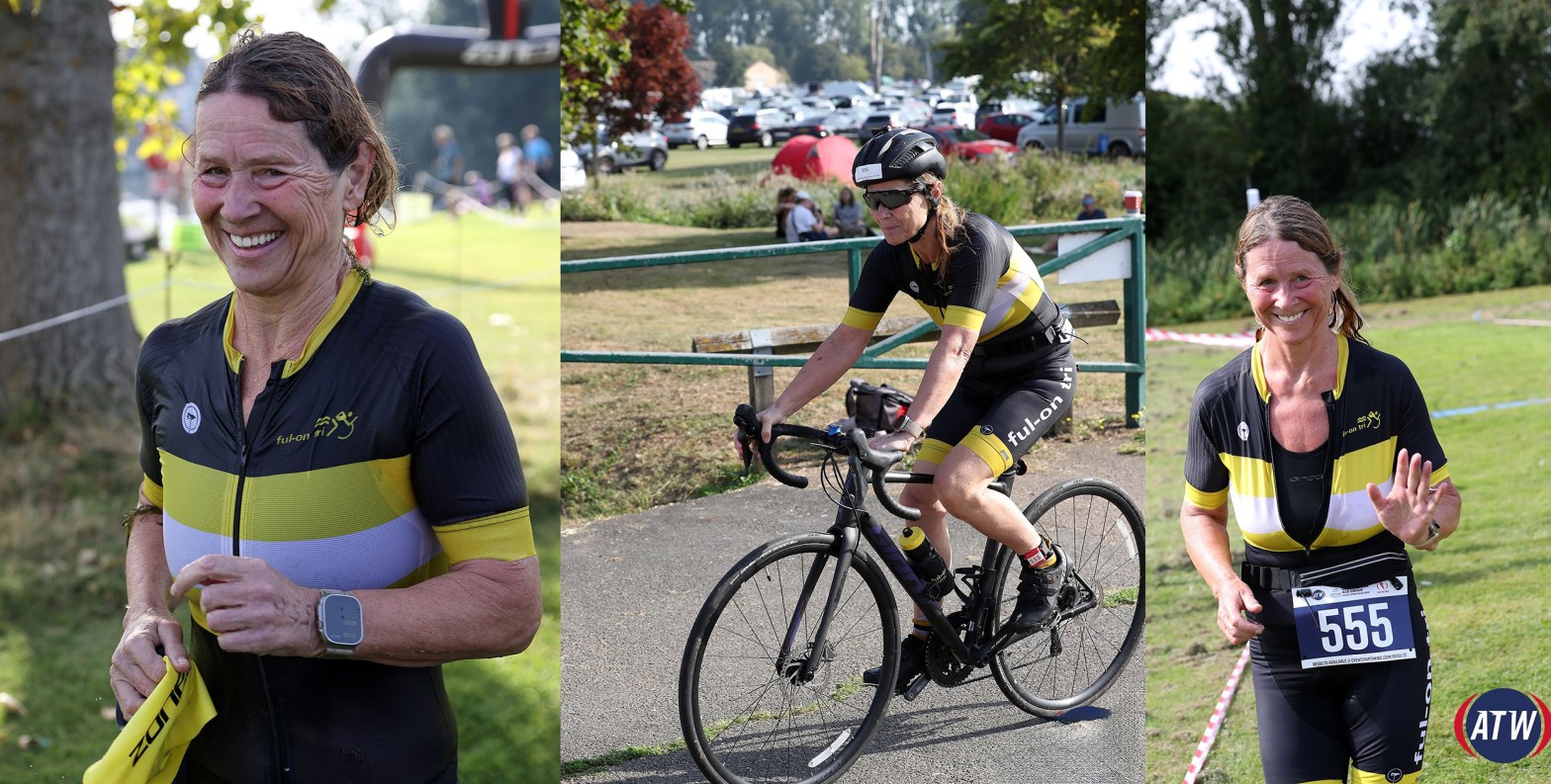
In my last post, about trying to qualify for the Triathlon World Championships in Malaga next October at the WTCS event in Sunderland, I wrote about how what can feel like a really good performance can sometimes just not be good enough. So I decided to have another go at making it into the Worlds, at the last qualifier event of the season, the ATW triathlon at St Neots in September.
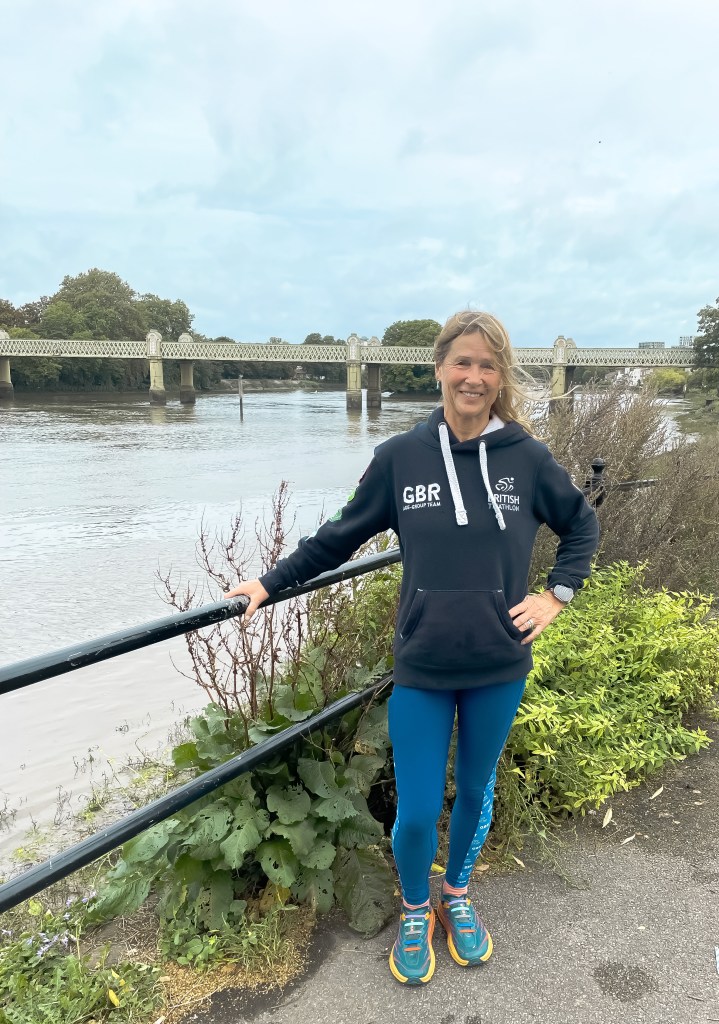
Yesterday I received the invitation letter to the World Championships from British Triathlon. Amazingly, once again, I’m in the team. TeamGB.
The success of this journey in my first season has been, I confess, something of a surprise to me. And it is fair to say it has been greeted with utter amazement by many friends, especially those from the worlds of church and journalism, who can be pretty much as far removed as it is possible to be from modern competitive sports, just as I myself was, 18 months ago.
Before the pandemic, my self-perception was as a contented if slightly-overweight mother and step-grandmother who loved to indulge in chocolates, croissants and ice cream and who was blessed with a happy working and family life. Then I almost died in 2019 from a critical episode of severe acute gallstone pancreatitis, doubtless exacerbated by said indulgences. This was a life-changing shock to the system. It altered me at a fundamental level in ways that even now are only just becoming apparent. Still, few can have expected me to resurrect as a 63-year-old competitive multisport athlete claiming membership of British Triathlon Age-Group TeamGB.
There is little I love so much as rocking my new TeamGB hoodie and leggings and chatting to the many people the kit prompts to start a conversation, my favourite of which begins, ‘So what year did you compete for TeamGB?’ Erm, I actually haven’t…. yet!
I wouldn’t be so facile as to say, ‘If I can do it you can too.’ I am fortunate to be free of serious injury and further serious or chronic illness and understand that not everyone of my age shares that fortune. I am writing this having spent three weeks fighting off a really nasty chest infection that derailed October’s off-season training. Multiple muscle tears around the hip and thigh of my right leg, from overtraining at the start of the season, have only just properly healed. But despite all this, I am in pretty good health, considering. At least, so Apple Health and my HRM insist.
Still, I do believe more people could have fun doing this, or something similar. At Sunderland, I met a volunteer with British Triathlon who had just returned from winning a world championship with masters hockey. Running, rowing, cycling, swimming and many other sports have opportunities for older athletes to qualify to wear our national kit. The thrill of preparing to compete as an athlete for TeamGB, at around the same time as getting the Freedom Pass and looking forward to the state pension, is simply incredible.
Of the sports popular with age-groupers, triathlon, incorporating duathlon, aquathlon and other multi-sport variations, is definitely one of the best supported.
However, it is worth nothing that the actual qualification process can seem a little complicated.
This whole journey has been a fantastic learning process for me, bringing many of my failings into sharp focus as well as shedding light on how to address them. One of these failings has been what I have learned about my acuity. Basically, I’m realising I’m not as clever as I thought I was. Because it has taken all season for me to understand properly the process.
After Eastbourne, I was amazed to qualify for the European Championships. I blithely entered Sunderland thinking it would be fun to go to the Worlds as well. After Sunderland, I was convinced I had qualified and a little downcast when I failed. Time to confront another ‘failing’ – a lifelong tendency to give up if I come second rather than first. It is never too late to learn that failure need not be the end. I decided to pick myself up and have another go.
St Neots was a last opportunity for next year’s Worlds. So many women of my age and older turned out there and so many were amazingly fast. Checking the results, I was convinced I had again failed. But once more I was wrong and thrilled to find myself in the team again.
The rules are here. Basically, to qualify, an athlete has to come within the top few of their age group in one of the three qualifying races, and also within a certain percentage of the age-group winner. For the Europeans, the percentage is 120. I came in at 118.94 per cent of the winner at Eastbourne. For the Worlds, the qualifying percentage is lower, at 115 per cent of the age-group winner. So at Sunderland, where my percentage was worse than Eastbourne although my performance much better, I didn’t make it. At St Neots I was just within 115 per cent of the age-group winner so just squeezed through roll-down, which I attribute to the sweltering weather making me eschew the wet suit that I always struggle with in transition. I flew through T1 at St Neots.
One thing we marginal age-groupers get good at, fast, is calculating percentages. So why did I think I had failed, even on the roll-down, and even though my maths were accurate? The clue lies in the term, ‘age group’.
In triathlon, similar to other sports, age-group athletes compete in the category according to how old we will be in the year concerned. It is the only time for many of us that we welcome getting older – learning to look forward to our advancing years is another great benefit of this sport.
The age groups ascend in five-year intervals. I am aged 63 at present, so have been competing in the 60-64 category. However, because I will be 64 this December, and 65 in December 2024, for next year’s Worlds and Europeans I am qualifying into the 65-69 age-group category. Next season, even though for the entire season I will be 64, I will be competing in the 65-69 age group. A birthday at the end of the year can be a significant advantage as age is an important factor, although not the only one, in determining athletic ability in later years.
So while my accident of birth has been good news for me this year – there is no way I would have qualified for either championship in the 60-64 age group – it carries with it a difficult further reality that has to be faced.
I started out on this journey imagining trophy after trophy. I learned new verbs, ‘to medal’ and ‘to podium’, and looked forward to taking part in ‘medal Monday’ on Instagram after a weekend of tri.
It wasn’t to be. As is surely clear to all by now, I am only just about muscling my way into TeamGB every time. At current levels of performance there is a strong possibility that once over in Spain at the Worlds, I might very well come last, or nearly last. Well we all know the fun is taking part and so on. But I’ve certainly had to adjust my goals and expectations. At least it is easy for me to find my bike in T1, it is usually one of the few still there!
The other women in age-group triathlon are seriously impressive. Going up with me next season to the next category are some super-fast athletes also aged 63. Never mind coming last, I will be lucky next year even to qualify at all for 2025 unless I can seriously improve my performance.
There are signs of hope. I ran a little at school, before a serious ski accident finished off my early sporting career. Although I never won a race, I was useful at cross country and often finished in the top three at my grammar school. Last season, at Ranelagh, I was excited to return to cross country, in the Surrey league, for the first time in five decades.
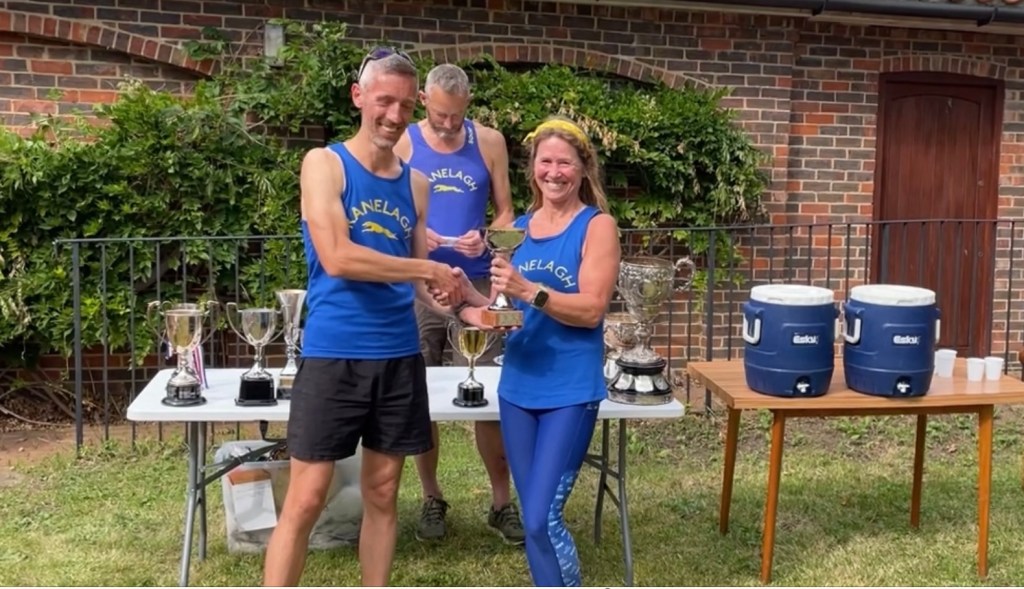
After the gruelling first race, at Effingham Common, I collapsed onto the stubble, gasping. Yet just turning up to race after race, through the cross country season, along with mob matches and other events, scored me enough points to win the Ranelagh Women’s Performance Award.
So one day at a time, I am in celebratory though, as ever, sober mood. The season has been a success beyond what I could have imagined, but also salutary in shedding light on the tough times that lie ahead.
Many thanks to my wonderful coach James Riley of Run Unbound for the thoughtful advice that has helped me get this far. Thanks also to all the lovely runners at Ranelagh, the athletes at Ful-on Tri and the cycling guys at KCR for so much support and encouragement, for believing in me and managing not to laugh in the face of, at times, significant evidence that what I am attempting is ludicrously impossible, even perhaps a little ridiculous. Thanks to Ed at Performance Works for starting to unlock those stubborn joints that had pretty much fossilised after those decades of careless if enjoyable indolence. Thanks to Teddington Bluetits for helping me to find the courage to open-water swim without a wetsuit and to my fun-loving Kew running group. And thanks most of all to my husband for enabling it all, on every level.
 Placement
Lovely post. V informative and well written.
A.N. Enabler
<
div>X
alanfranks.com@alanfranks
<
div dir=”ltr”>
<
blockquote type=”cite”>
LikeLike