UAL Level 3, Unit 7, at Richmond Art College
The Photographic Project.
LO1: Understand photographic research
In this level, we identified a subject for a photographic project and carried out research for a photographic project, researching the work of at least three artists in preparation for the project and analysing the way ideas, materials and techniques can be used to inform own practice.
- Annie Liebovitz, born in the US in 1949. Any aspiring photographer would surely be inspired by her astonishing artistry with portraiture. Possibly her most famous and iconic work is from the session with John Lennon and Yoko Ono, for Rolling Stone, in December 1980, hours before Lennon was senselessly murdered. This photograph was taken on a Polaroid. Once seen, it cannot be forgotten. The extraordinary sense of vulnerability and intimacy is achieved, perhaps, by the impact of having Yoko clothed while Lennon is naked. But the framing and positioning of the viewer above the couple adds to the effect. She has taken countless images, preferring a Mamiya but also using Hasselblad, Nikon, Canon and more. See this photo plus nine more of her best shots here.
- Bee Trofort. One of my hopes is to do sports and action photography. It is incredibly difficult because of capturing the moment often in the middle of high-speed action, so it challenges light and focus as well as concept. Trofort has developed mastery at this and shows with artistry the great beauty and pain inherent in high achievement in extreme sport. See some of her best shots here.
- Laura Zalenga is inspiring to me because she has found success photographing a particularly unfashionable demographic – older people. See her Adobe residency project here. In this work, she finds beauty in people where the rest of the world might not have noticed it, in the faces and bodies expressive of a lifetimes of living. But she is versatile and finds intimacy in much more besides people – she interacts with landscape, nature and more to create interesting and contemplative portraits across a variety of genres.
LO2: Be able to produce a photographic project
Task 2. Develop ideas of ‘intimate portraits’ using early research as starting point.
2.1 Identify photographic resources to complete a photographic project. Make initial shots and analyse first set of images.

Nikon Z6:II, f5, 1/1000, ISO 2000, 100/70-300mm.
Nikon Z6:II f6.3 1/1000 ISO 2800 116/70-300mm

Nikon Z6:II, f5.6, 1/1000, ISO 600, 300/70-300mm
My first idea was to focus on London’s parkour community. In the end I decided this was not the best subject for this ‘intimate portrait’ project, because it had a necessary focus on action shots. Nevertheless, it should still make a good zine or similar exercise at a later date.
Focusing on portraits for the photographic project, I worked first with London’s parkour community.
The assignment brief was to enable an individual to create their own portrait, resulting in three pix, one in their chosen environment, one closer and one close-up.
My subject was Arthur, a young man who is passionate about parkour. For the photographs, he wanted them to illustrate the skill, fun and beauty of movement, which in parkour is intimately related to the environment, as well as the grounded integrity of the community, if ‘grounded’ is an appropriate word in this context!
The first shot shows a classic moment of movement in parkour, a leap caught mid-air between walls, being filmed while it happens by another member of the community.
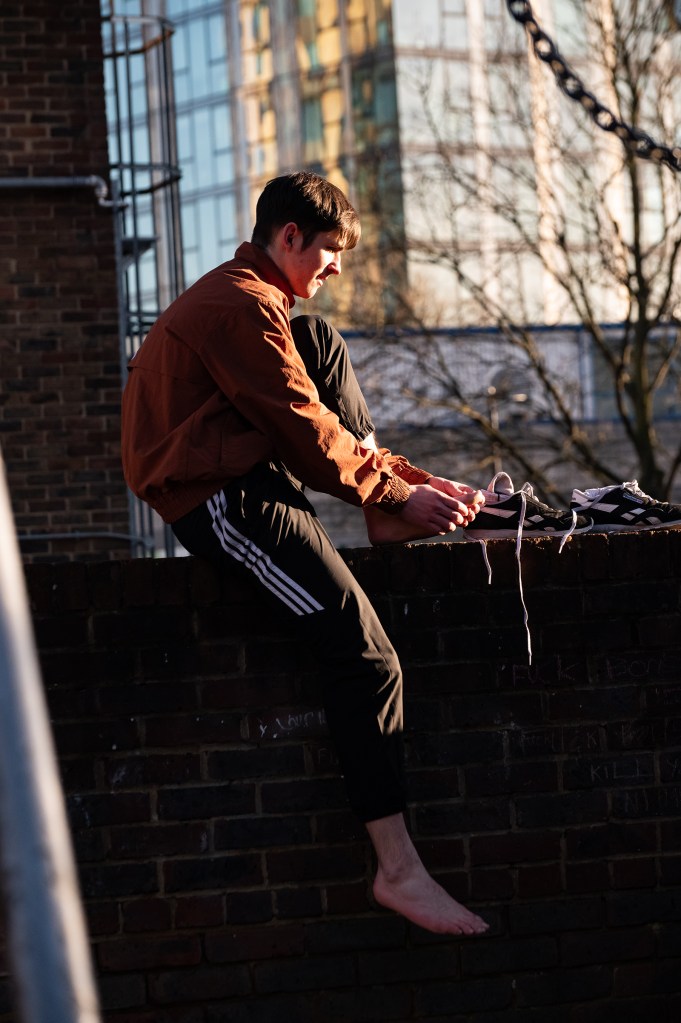
The second shot shows a moment of vulnerability. Such moments are common to all parkour athletes, when possible injuries need to be inspected. I loved the way the afternoon sun was caught on the buildings behind in Archway, north London and how he chose a pretty high wall to sit on to examine his bruised feet. I hope further on to catch some of the powerful contrasts between the human vulnerability of parkour in the context of brutalist architecture that is so much a feature of London’s inner-city communities. This photo shows a little of this, in the beauty of the late afternoon sunlight.
The third, close-up portrait shot is taken during a casual moment when he is chatting to other members of the community while reflecting on the opportunities in the urban landscape to train.
In the process of empowering the subject of this and other photographs for the project, it became clear that as much as possible I should blend in the ‘background’ in the sense of not attempting to set up moves or shots, and not get in the way of jumping or running routes. In that sense, shooting parkour is very much like the street photography genre – trying to capture the ‘decisive moment’, even lying in wait for it for as long as it takes, but absolutely not trying to ‘set it up’ myself.
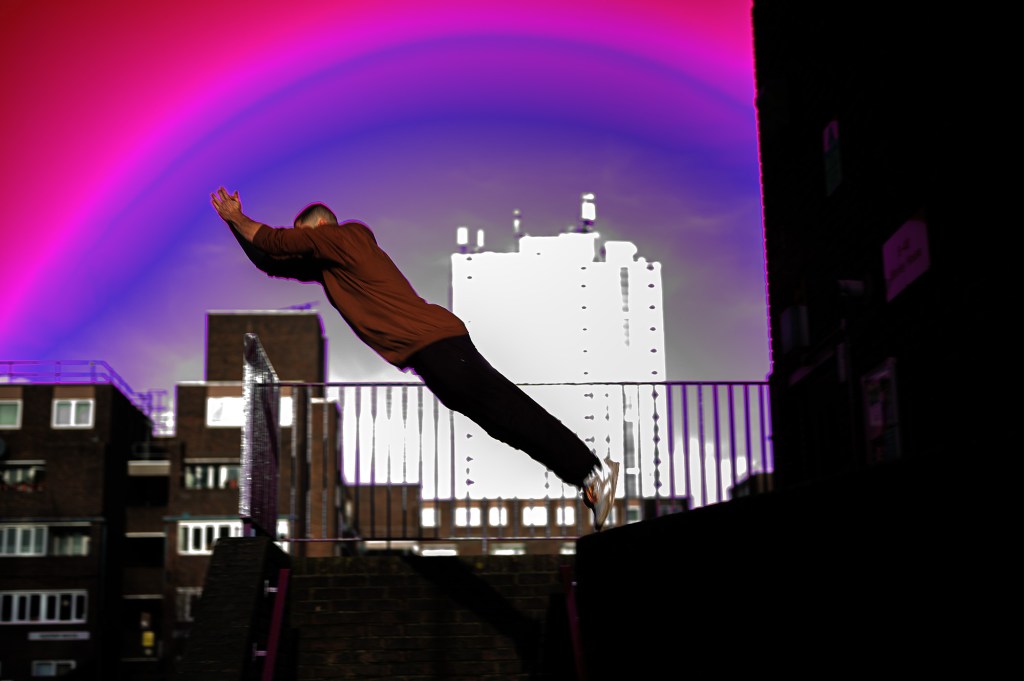
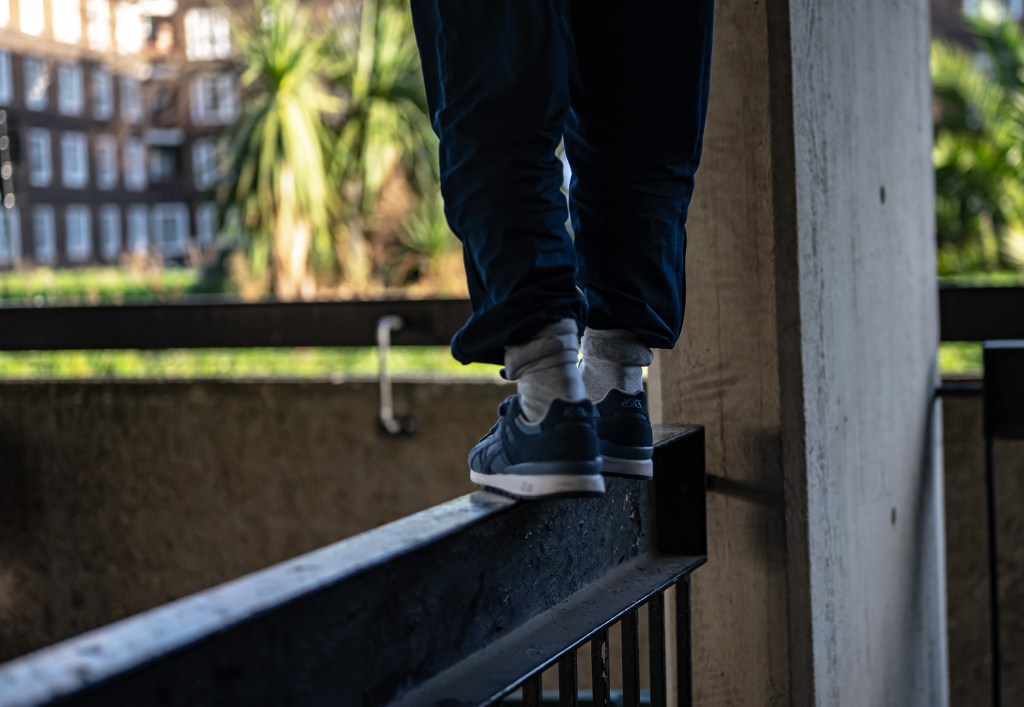
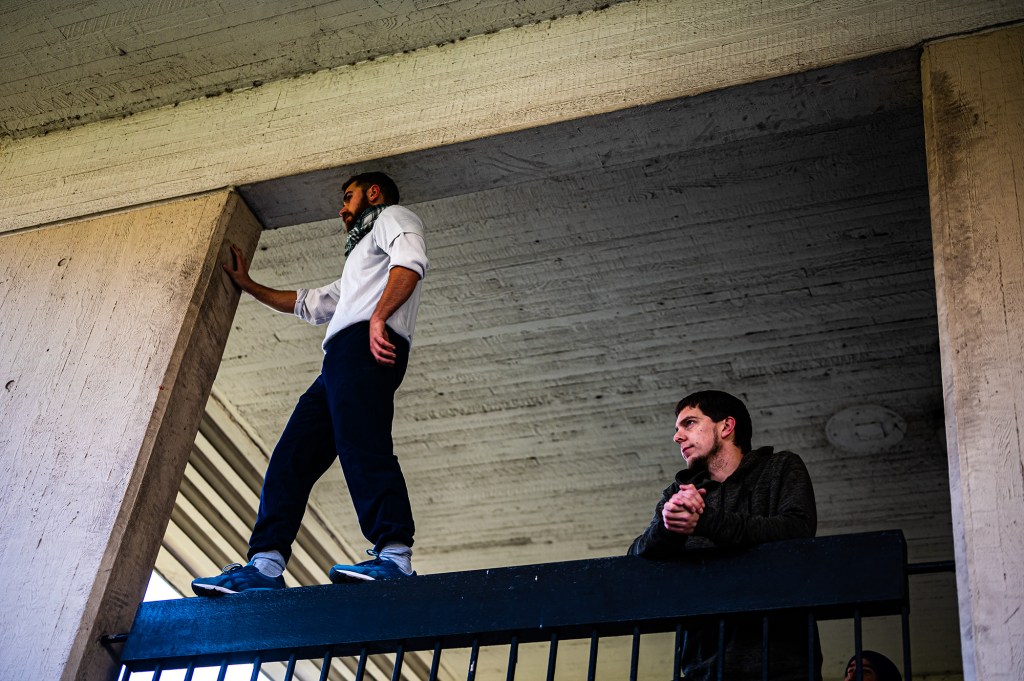
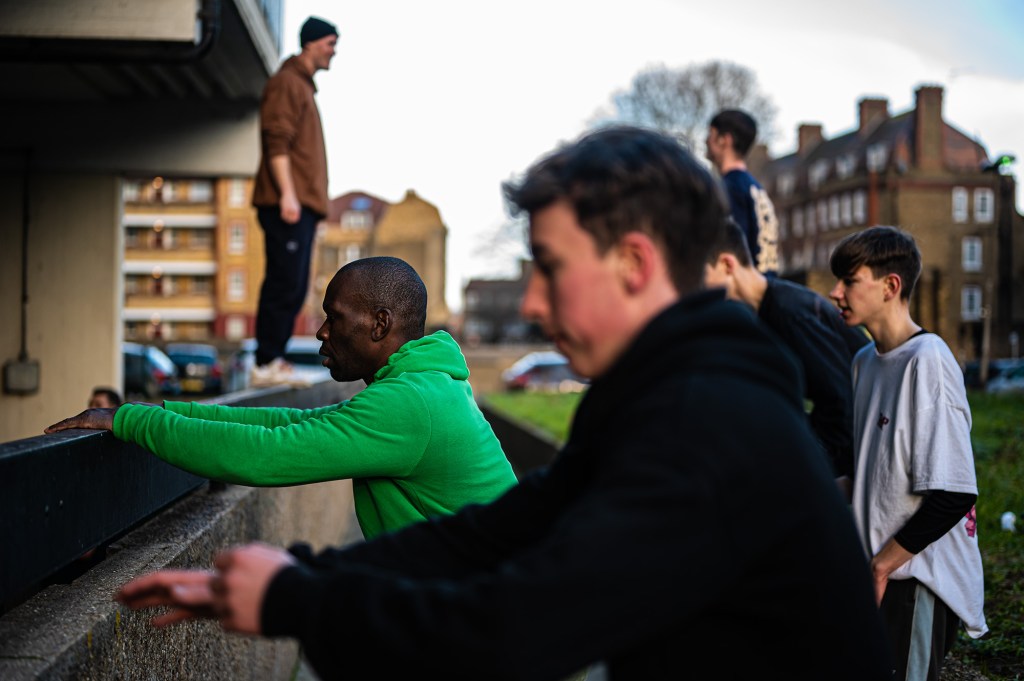
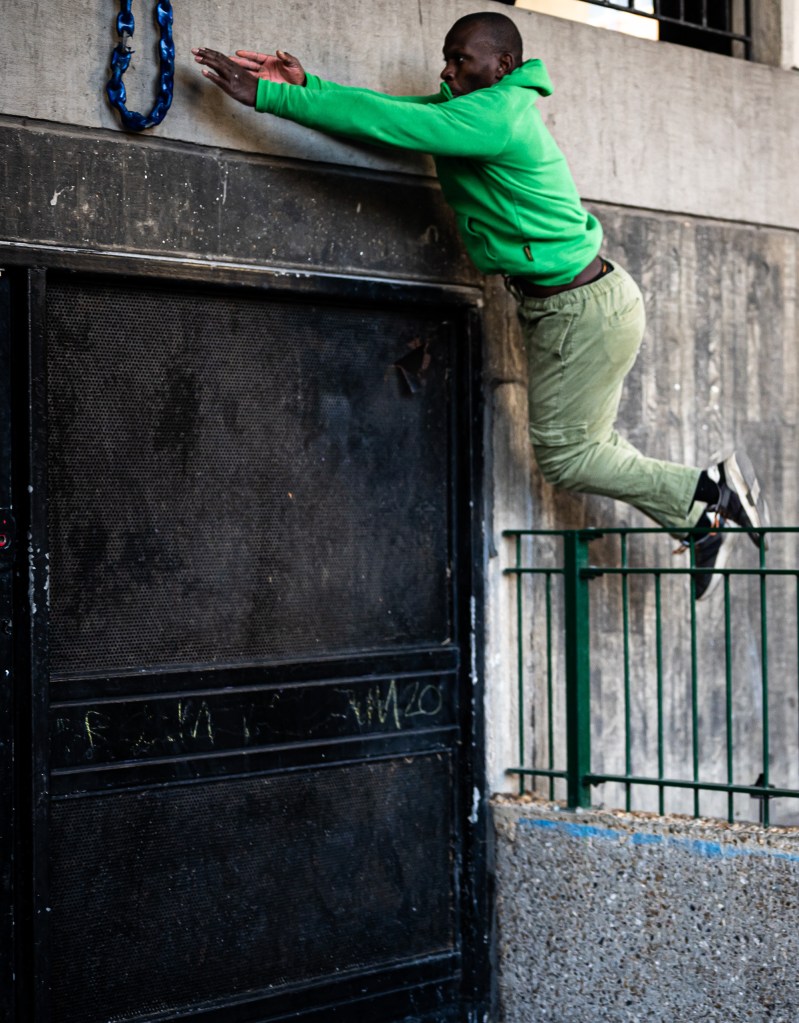
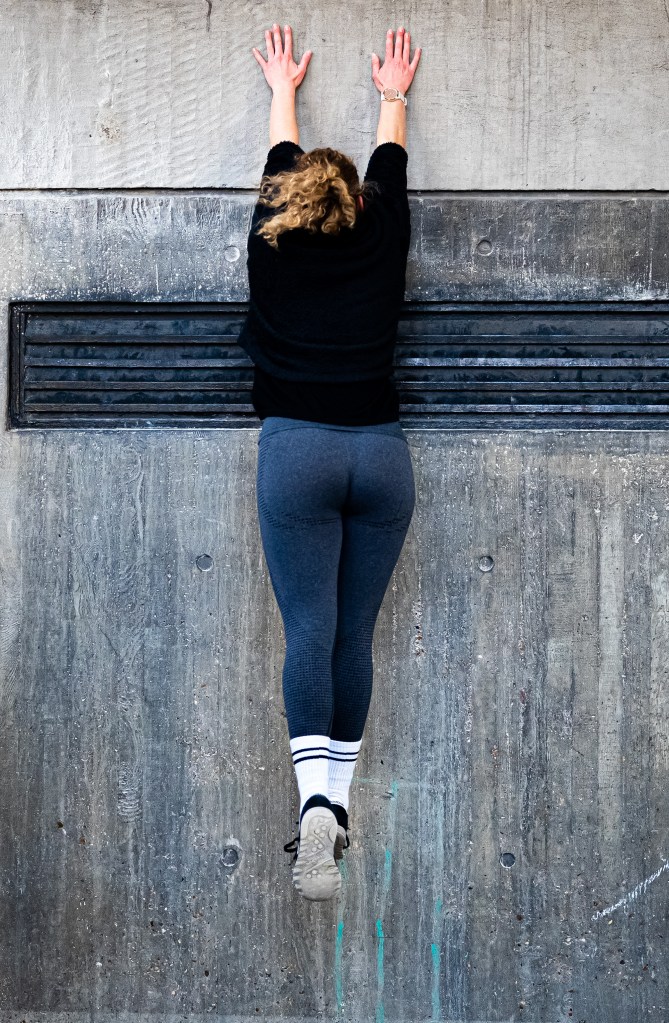
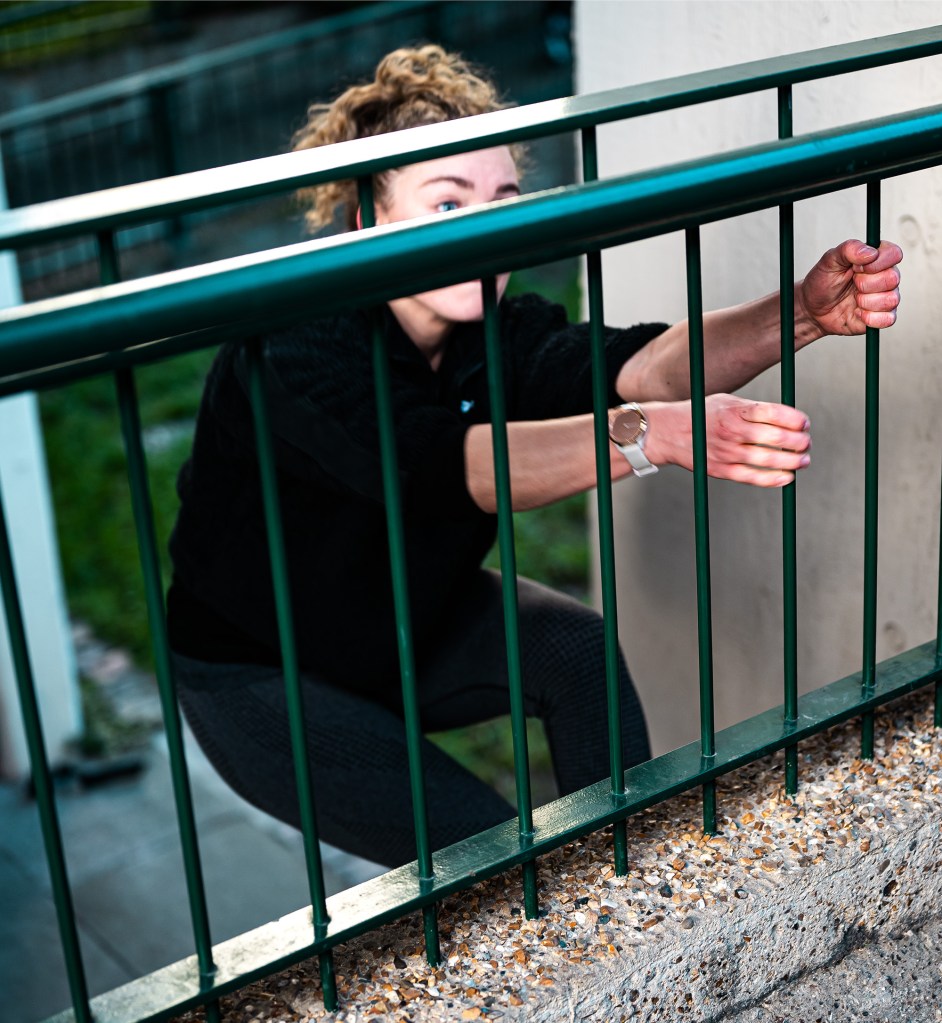
Above is a selection of a few more photos from the last two parkour shoots.
Task 3. Further develop ideas and be inventive with visualisation. Experiment with materials alongside development of ideas, showing observations and tests. Continue to research artists and designers.
2.2 Produce photographic images to meet identified goals.
Task 4.
Complete and present the works from developed ideas and material research. Consider and explore alternative presentation and printing techniques. Reflect on peer feedback in class.
Identifying presentational forms for a photographic project, I tried printing out shots and felt they worked adequately but this parkour project would be better for a photobook or zine. Analysing and evaluating the photographic project so far, I decided to pivot to a different style of images focused more on the concept of the intimate portrait.
The aim was to produce a set of images that show an experimental approach and investigate photographic technical and visual opportunities, with around five photographs exploring and analysing materials and techniques.

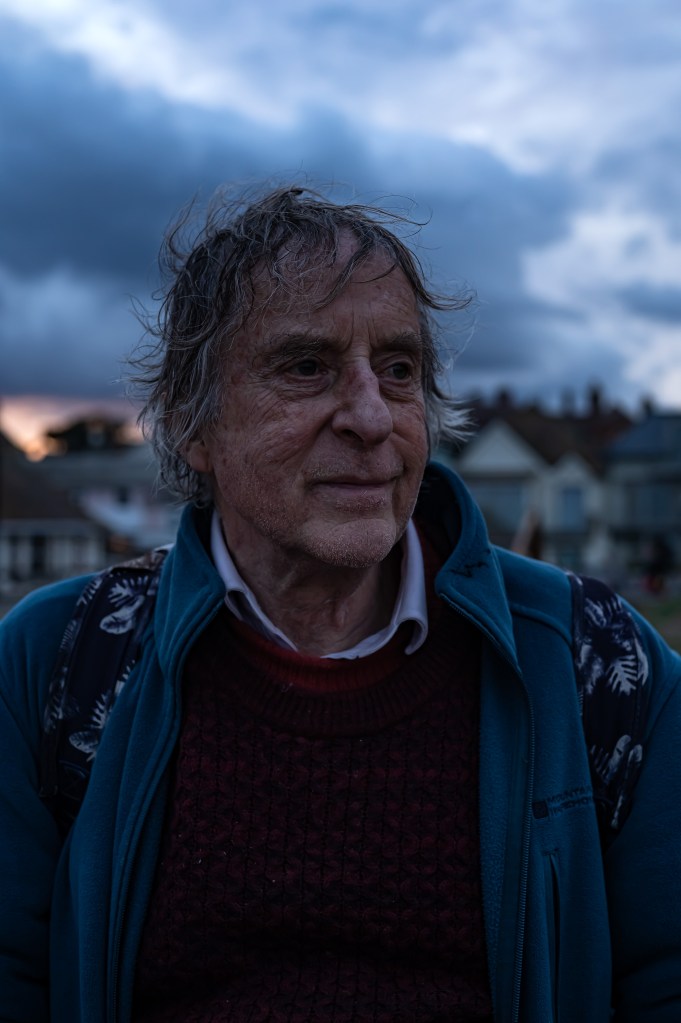
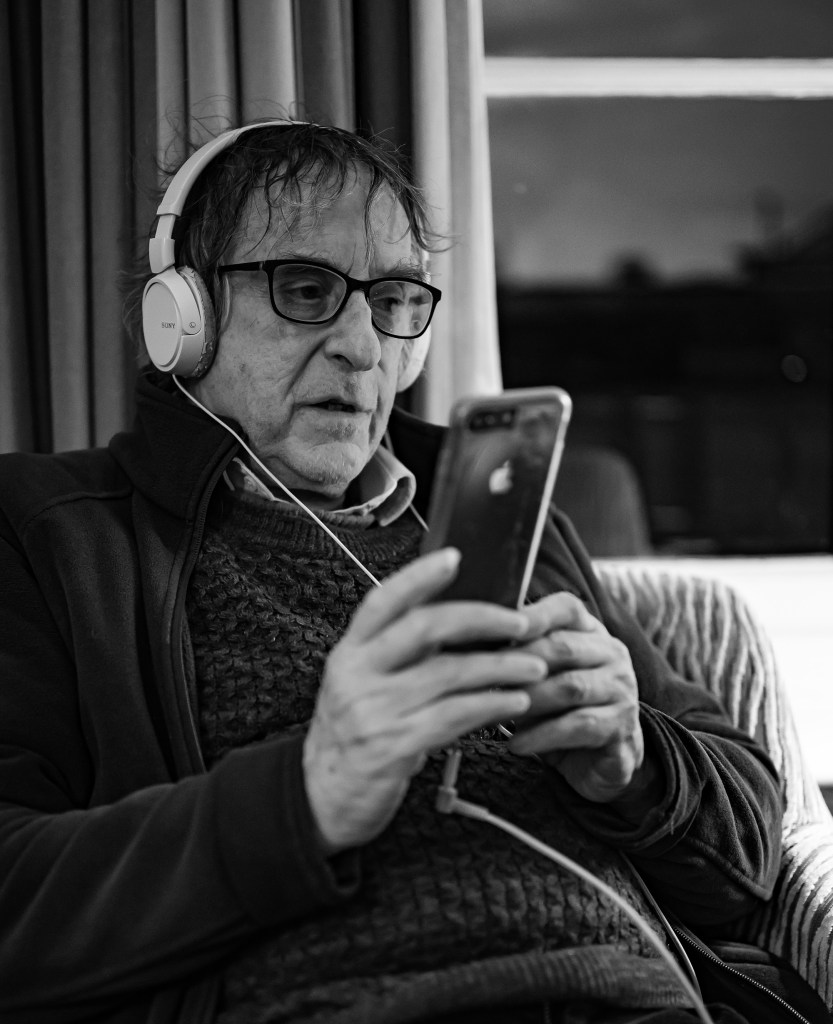
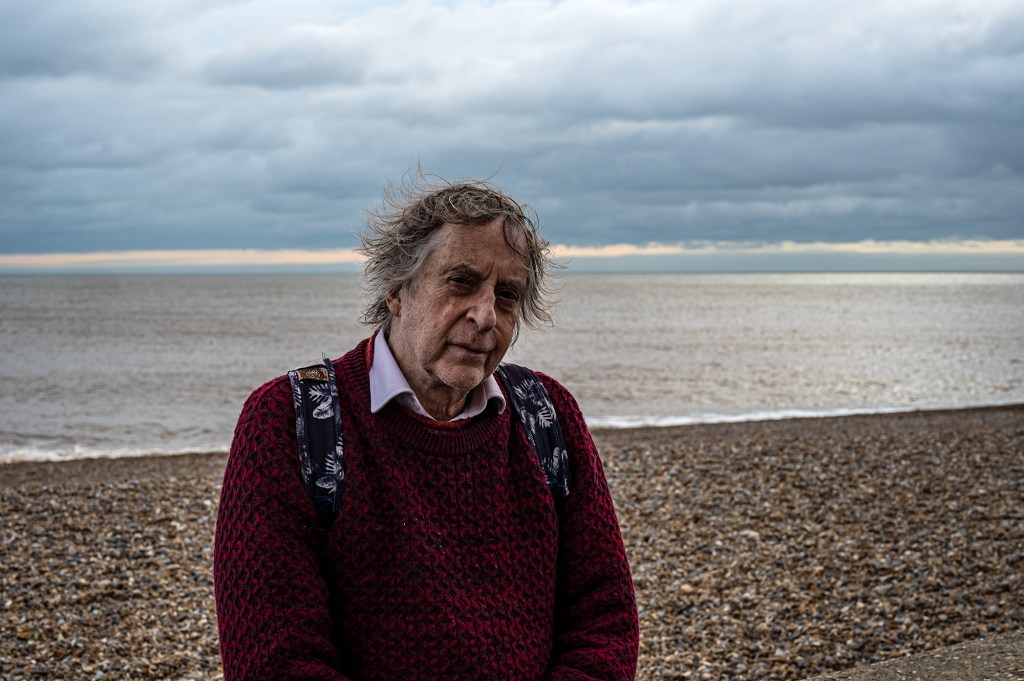
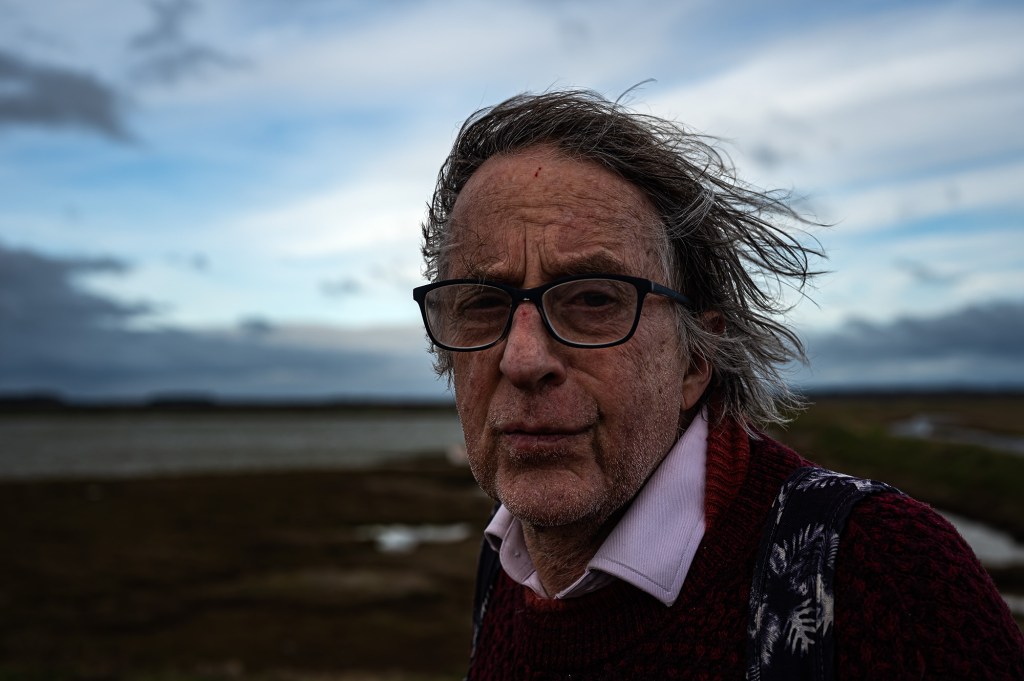
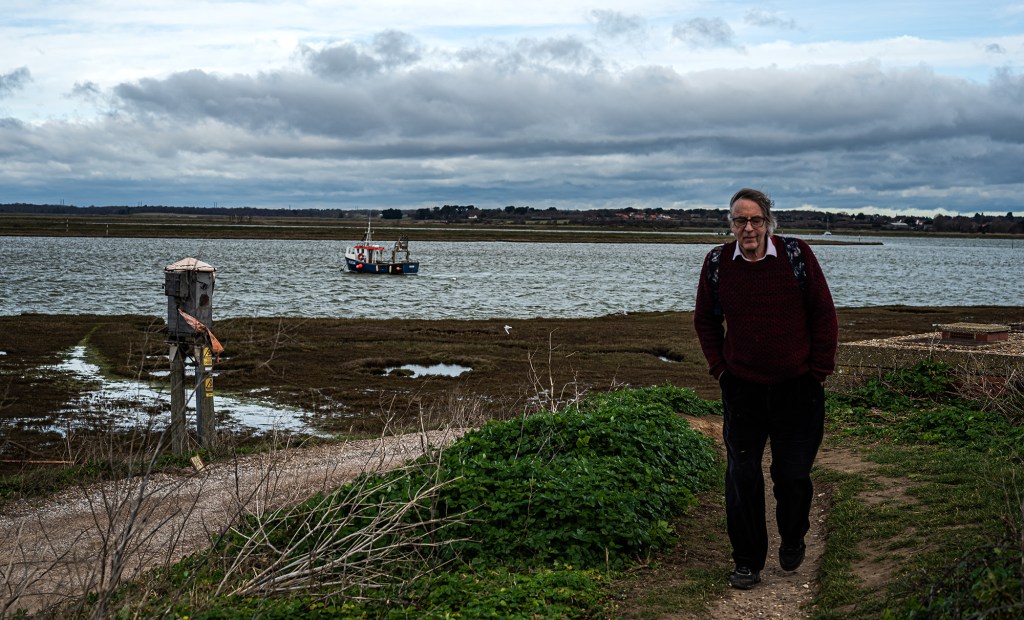
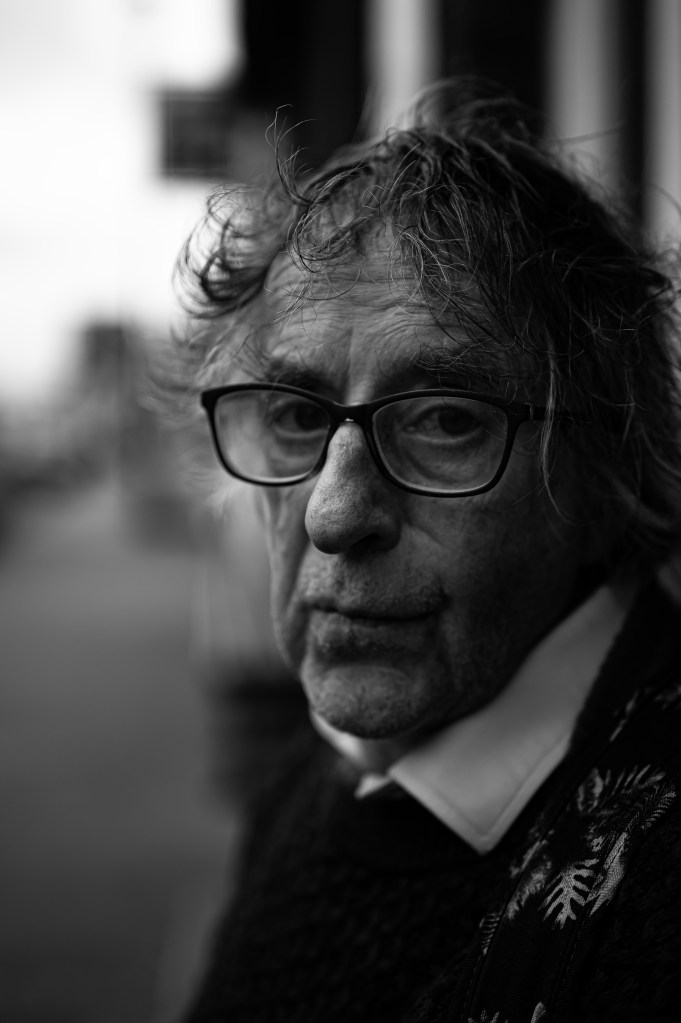

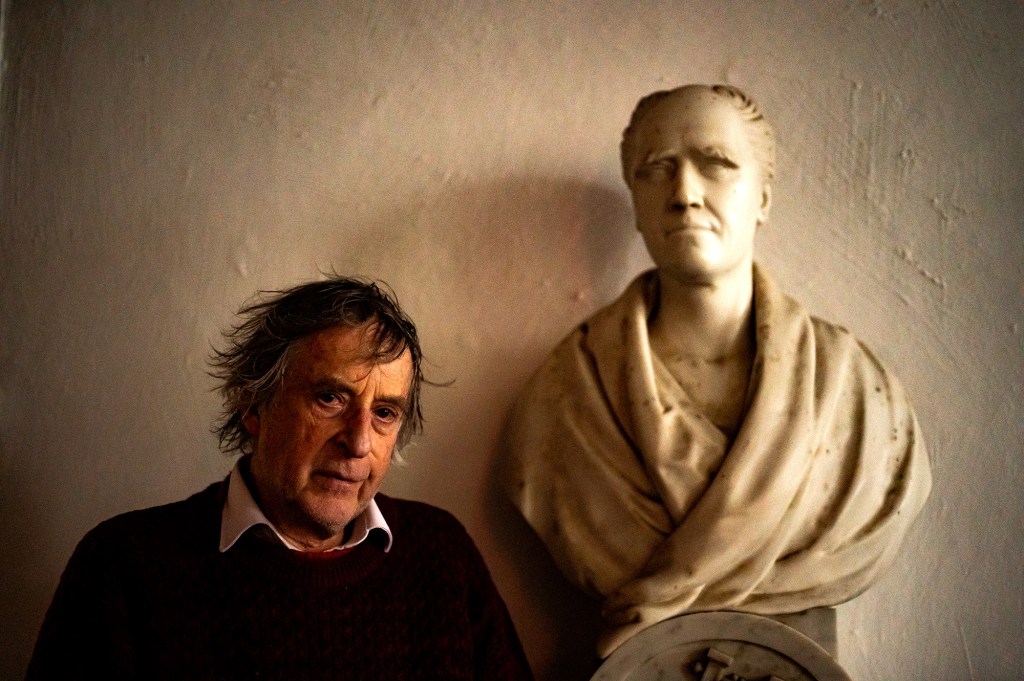
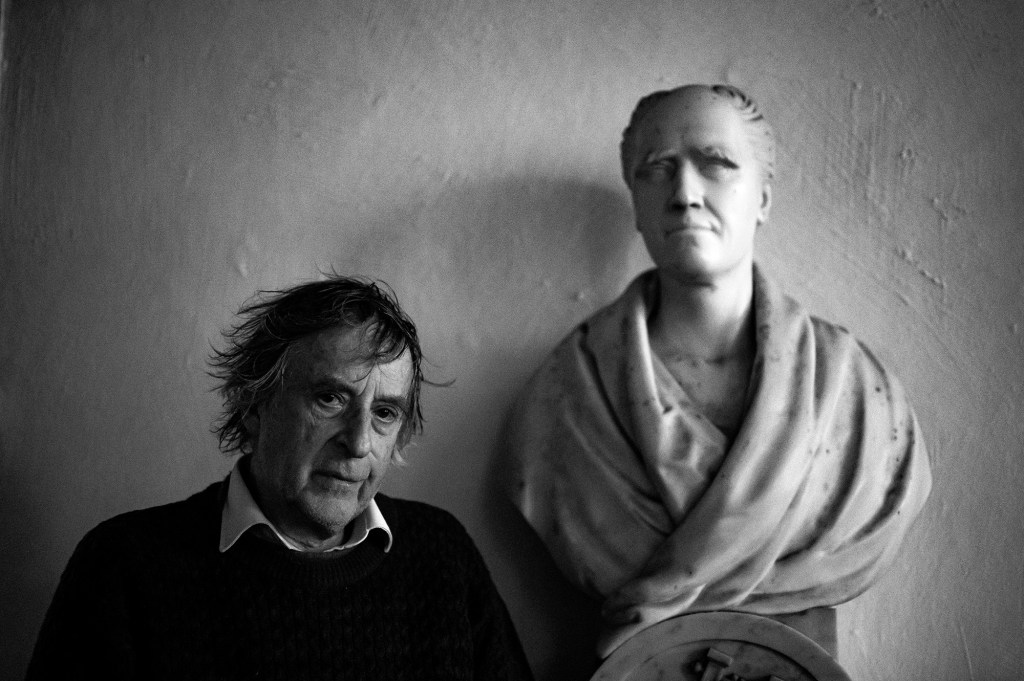
All pix with Z6.II 50/35mm prime lens.

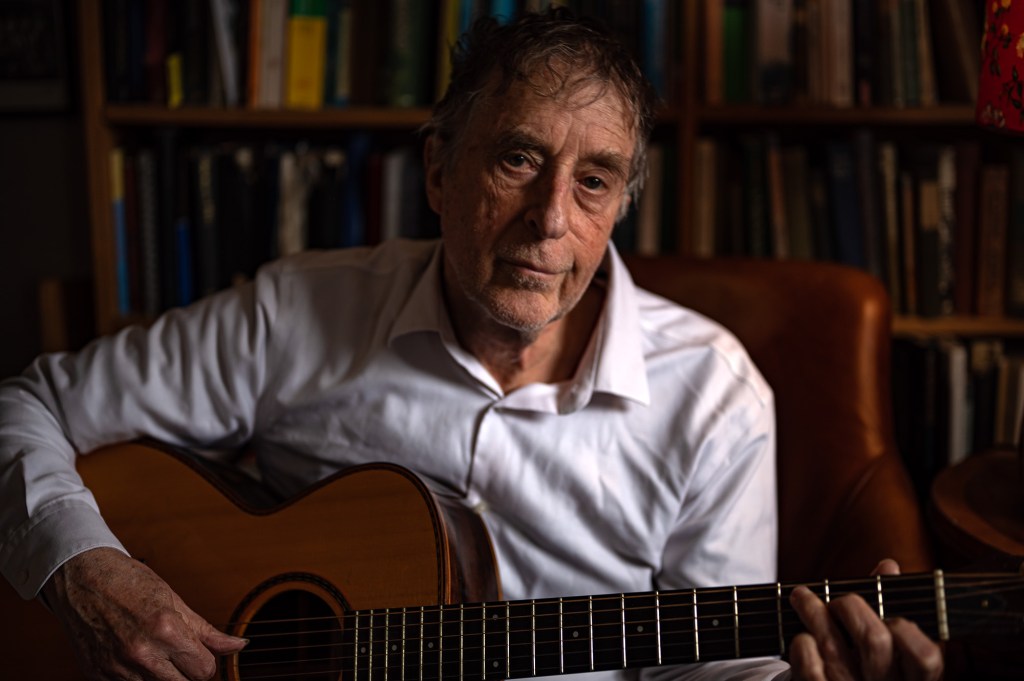
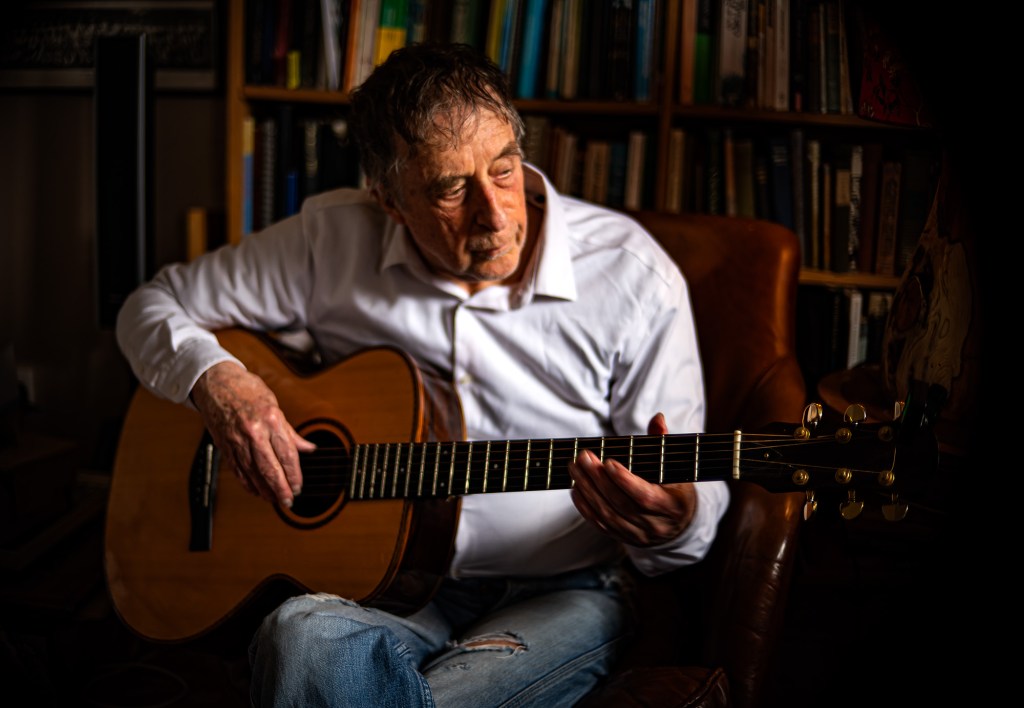
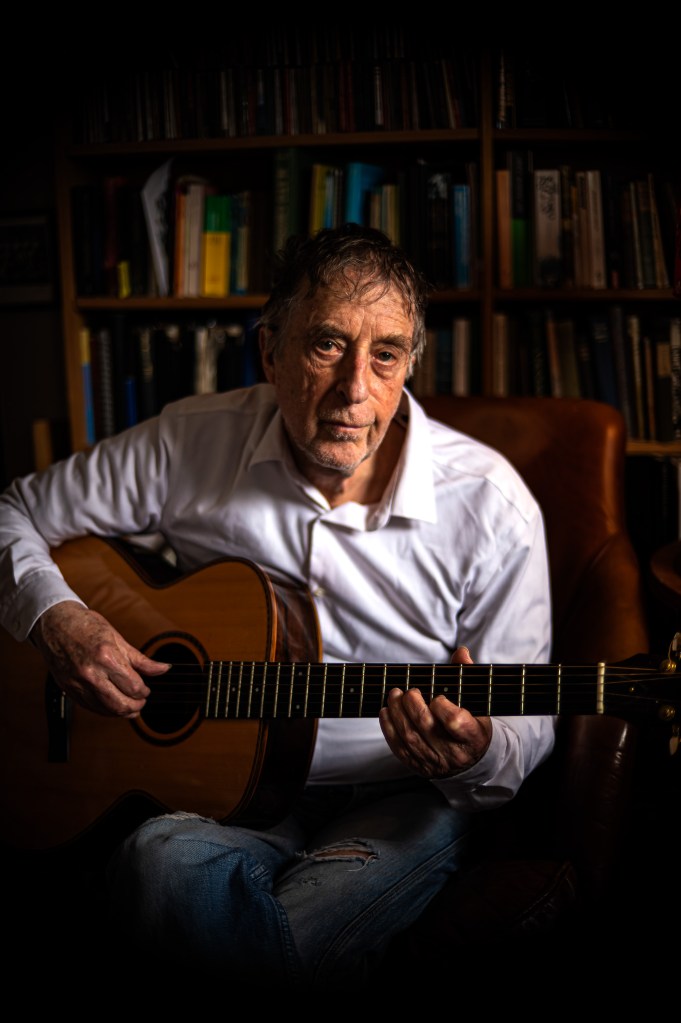
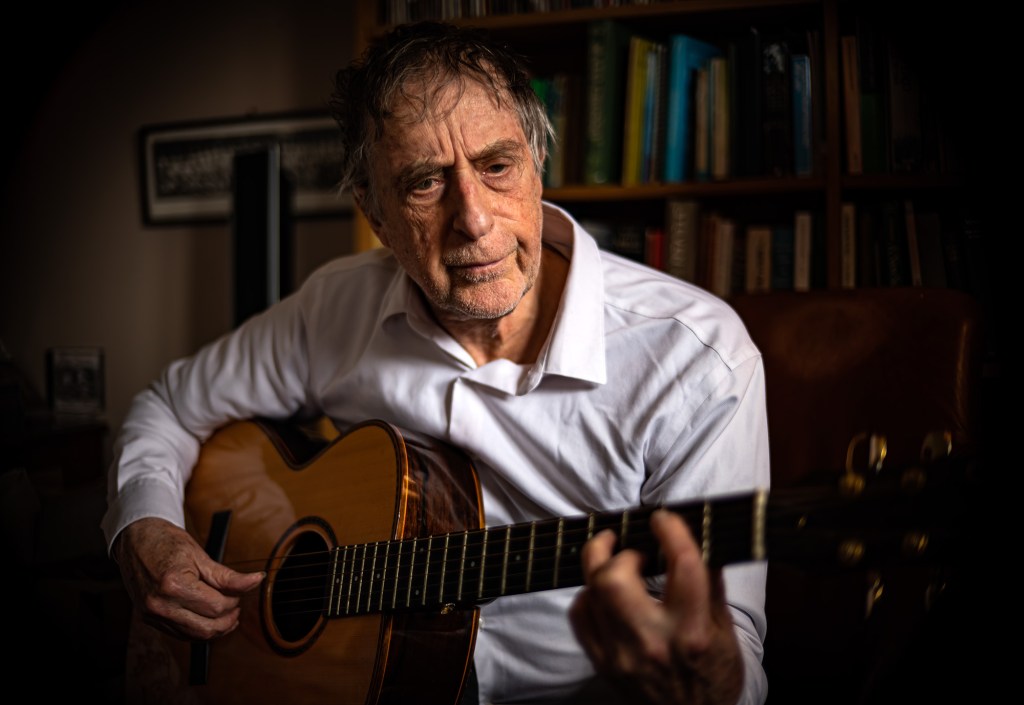
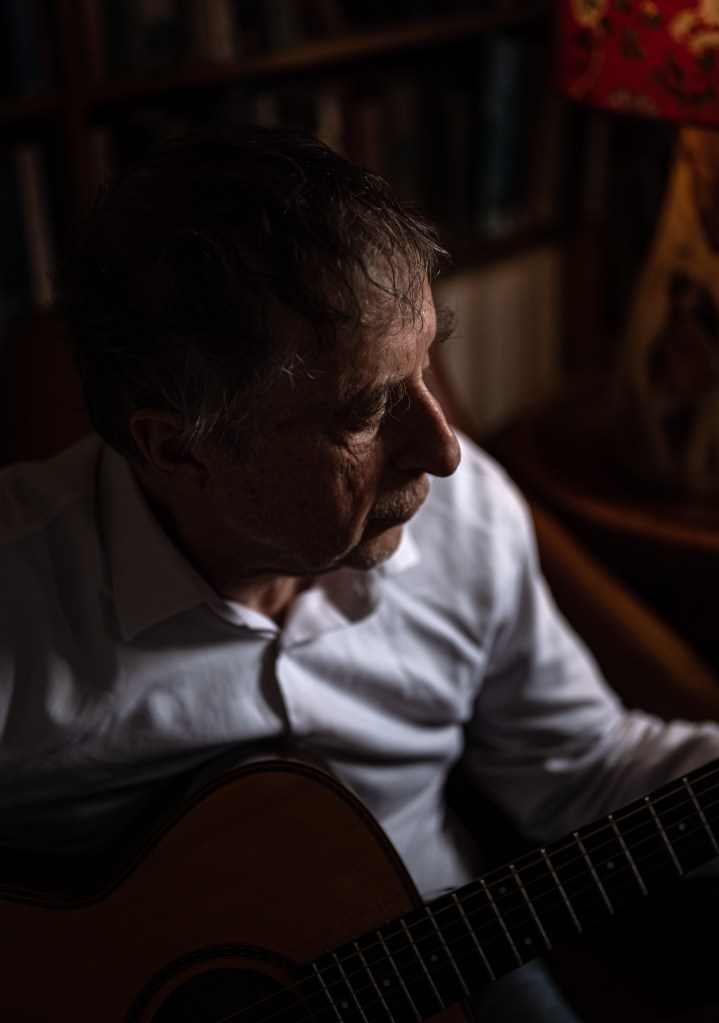
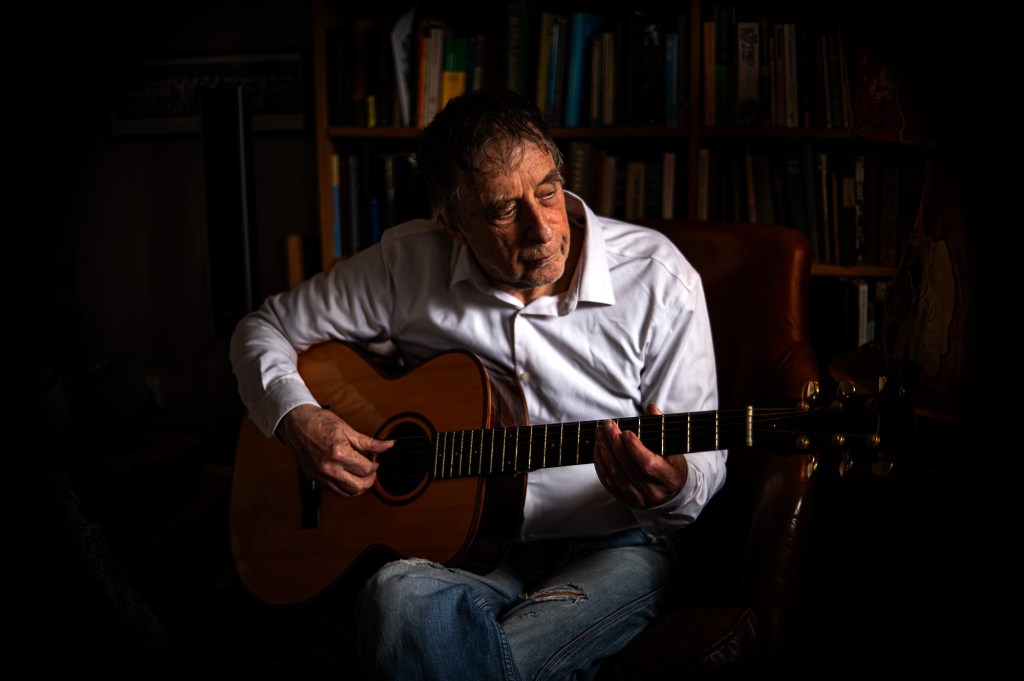
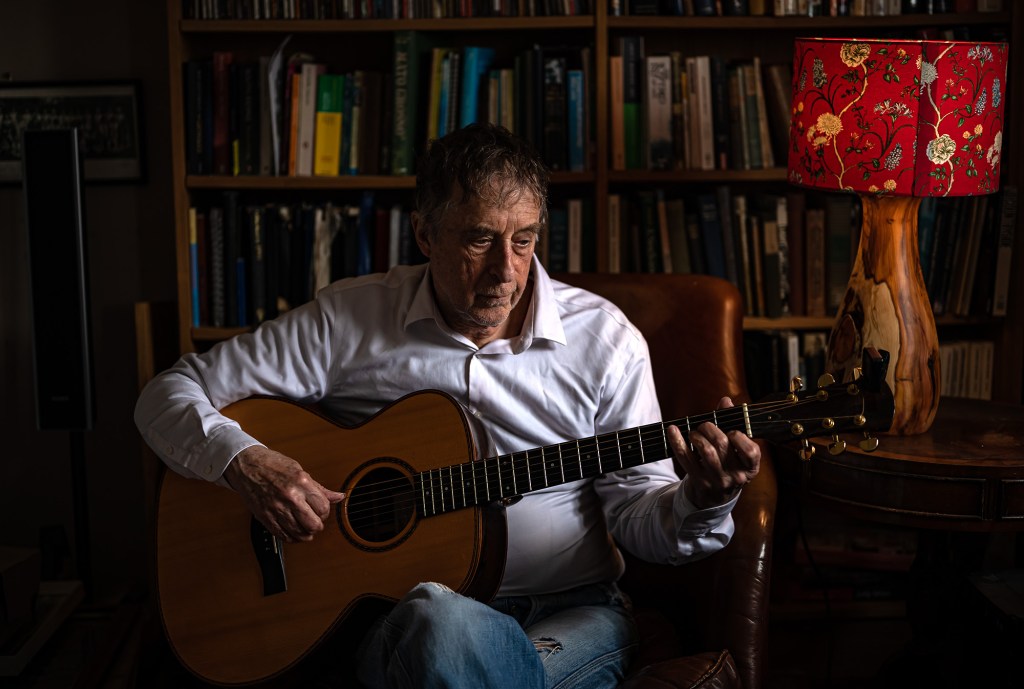
Prime lens NikonZ6.II 35mm f1.2 manual focus. Light editing in Photoshop.
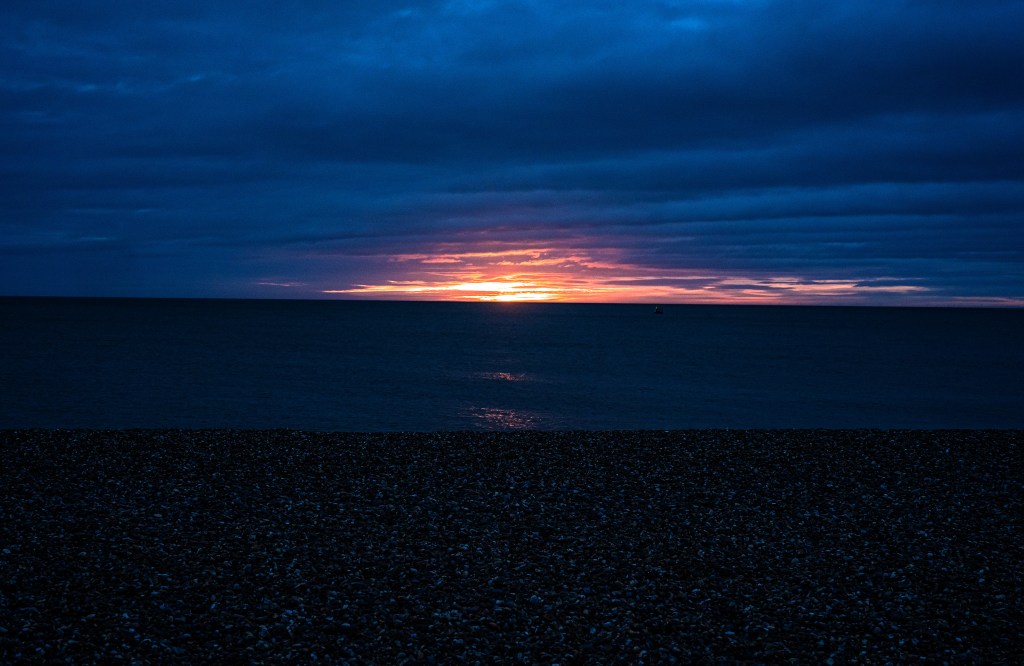
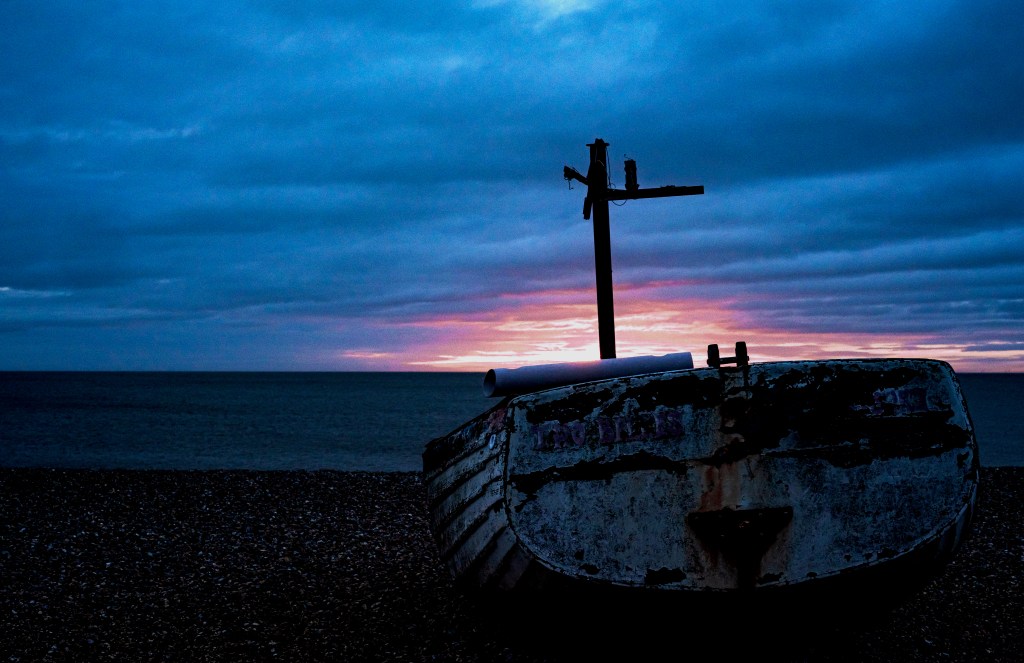

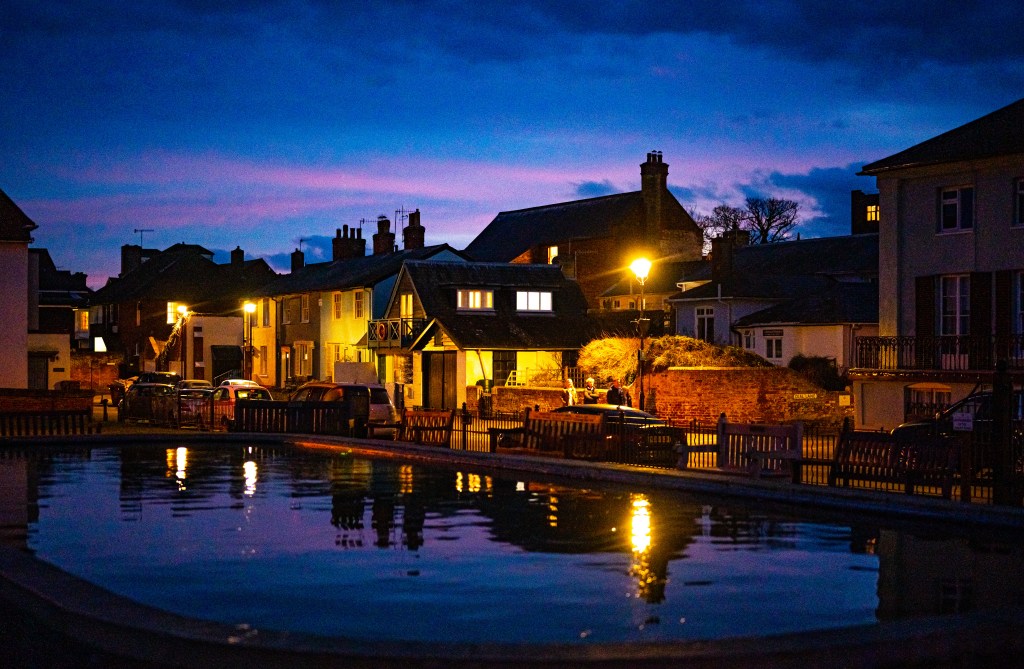
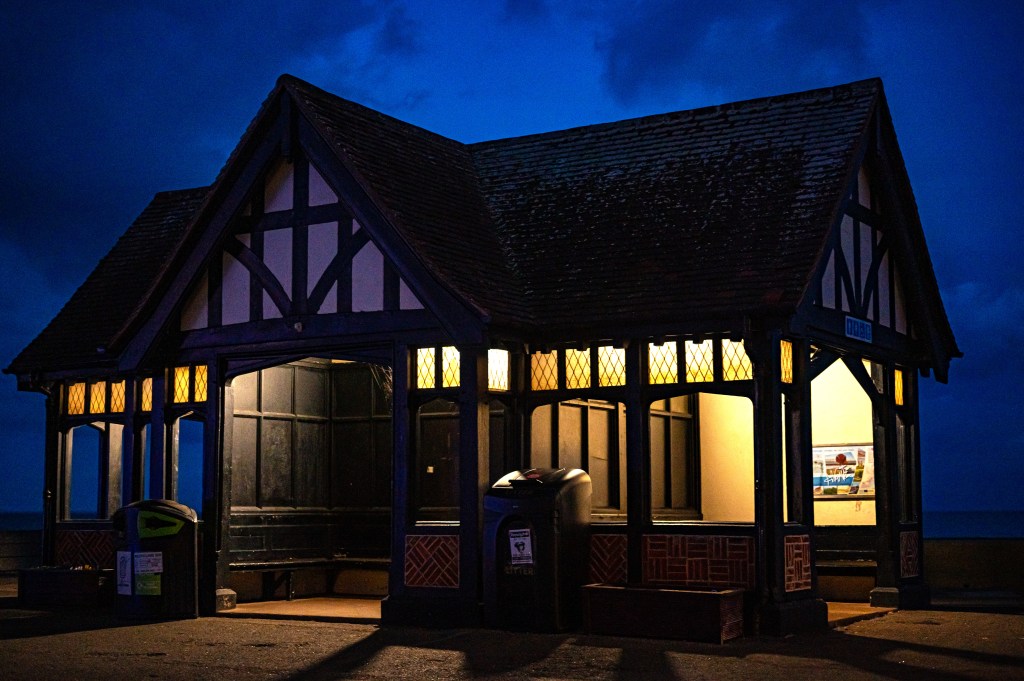
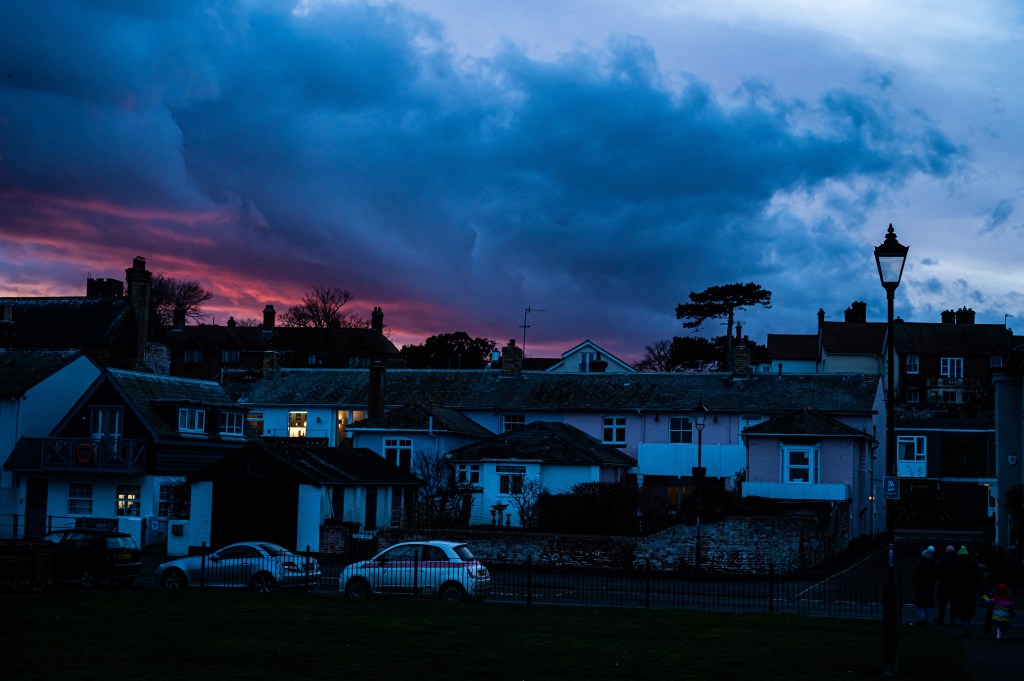
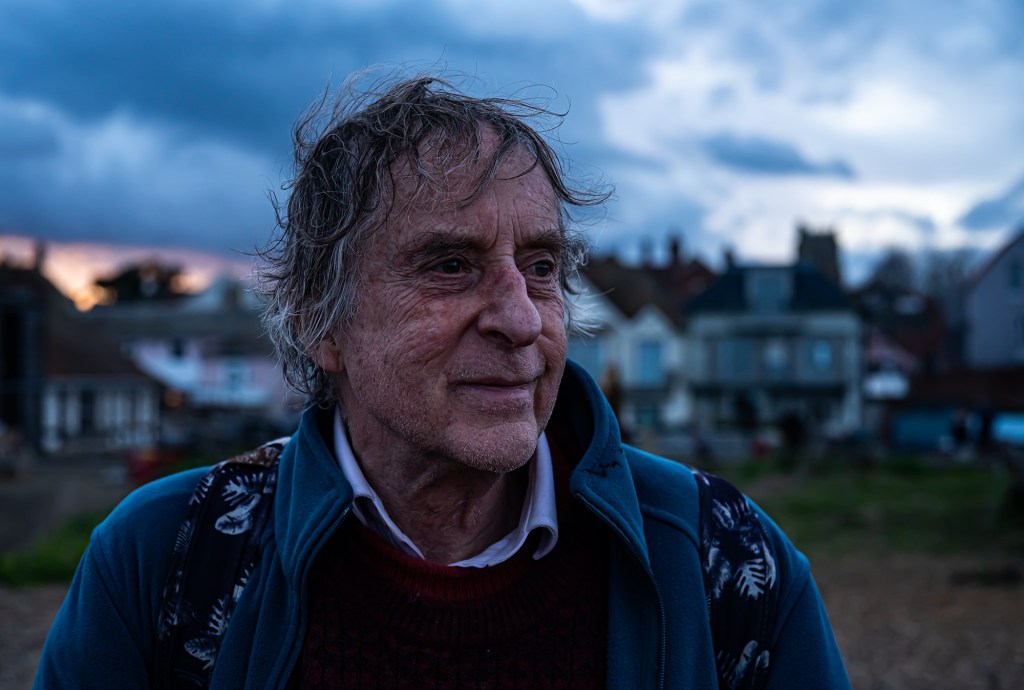
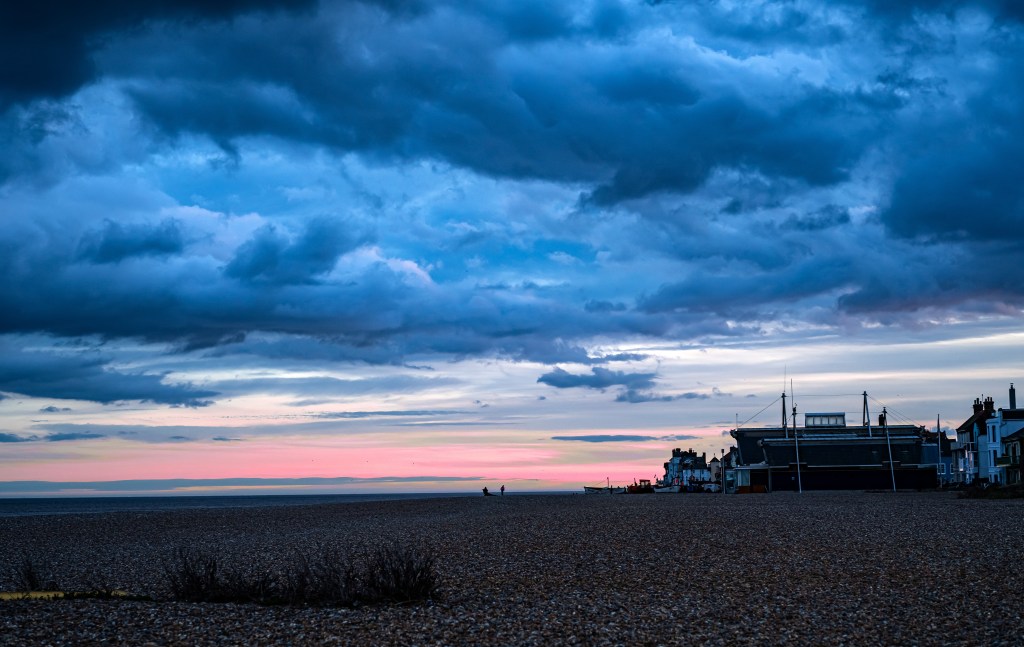
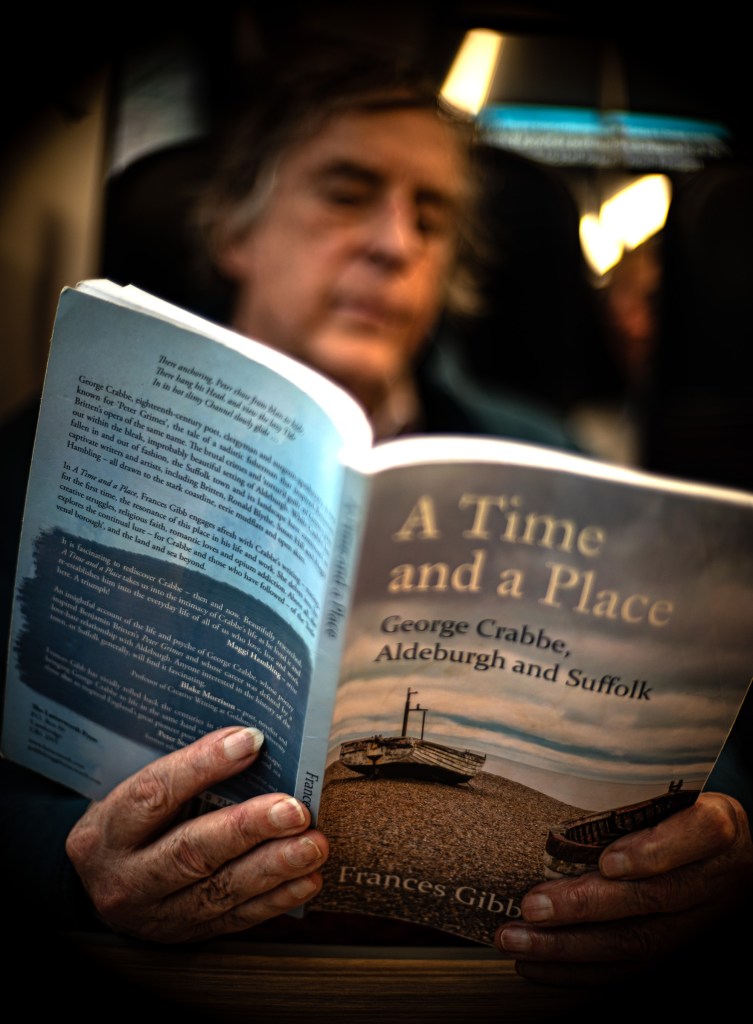
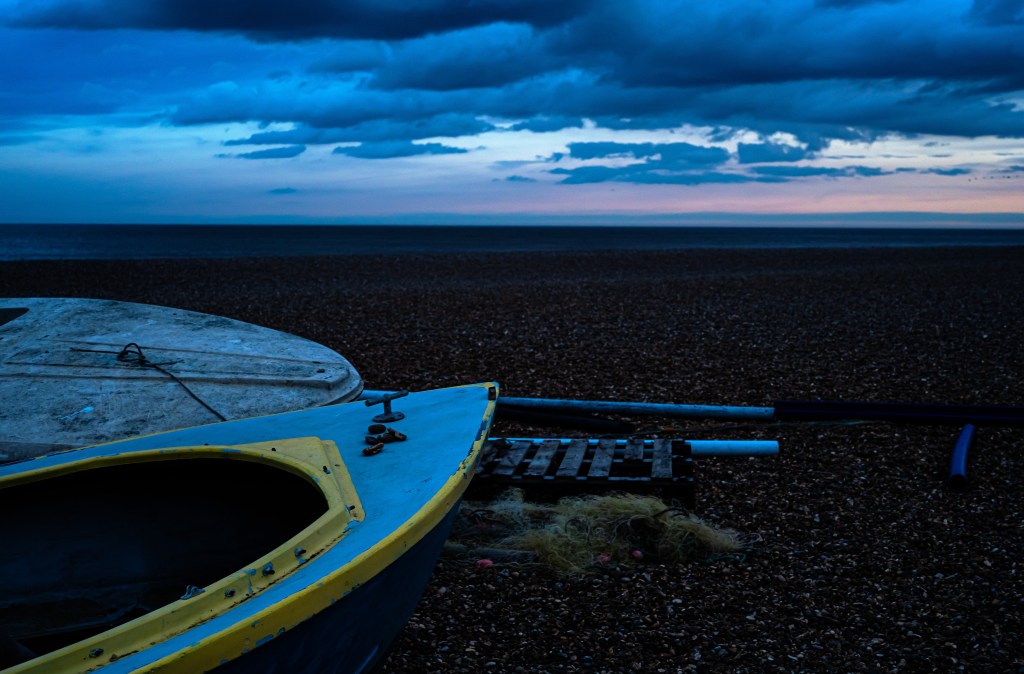
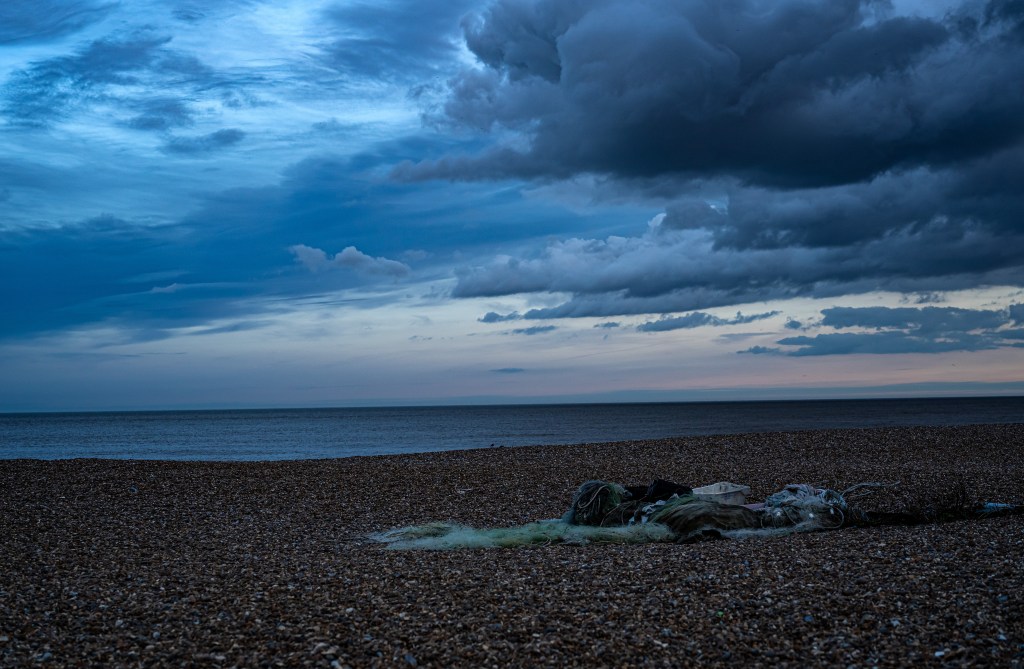
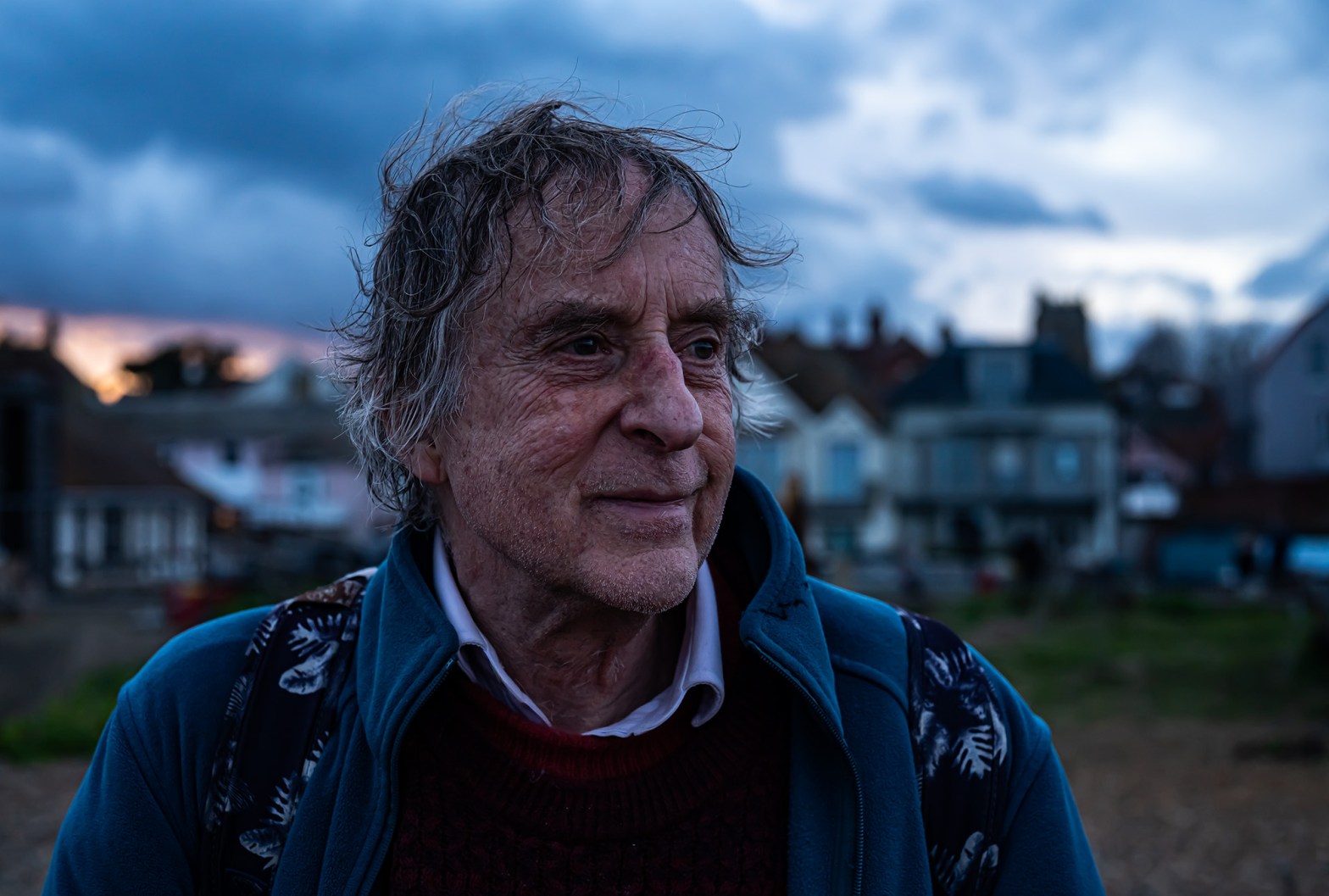
I took a series of portrait photographs of Alan Franks in the context of a separate project we are working on for use in our latest entry in our Place of the Poem project, which is about George Crabbe, Peter Grimes and Aldeburgh. See previous entries here and the Aldeburgh concept here.
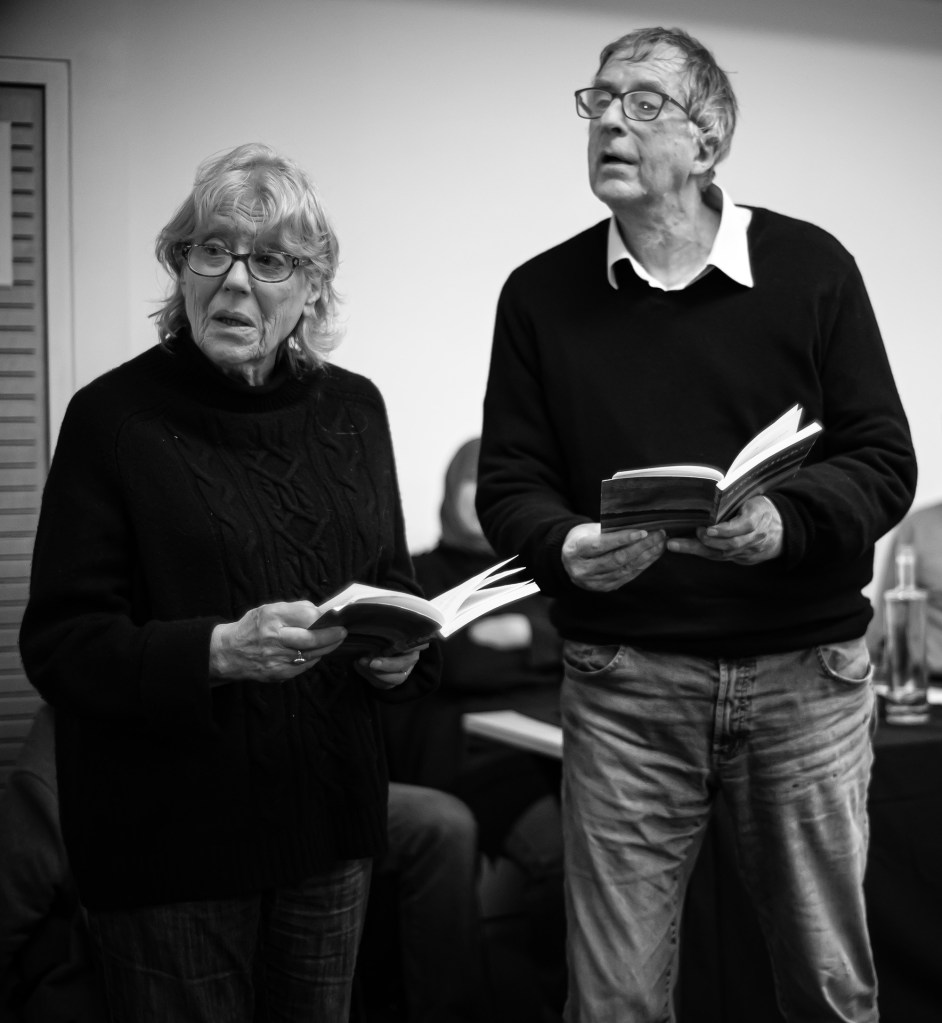
I also did some ‘intimate portraits’ of Alan in acting mode pictured here doing a brief play reading at a Stop the War event with Kika Markham. All shot with Nikon Z6:2 35mm prime lens.
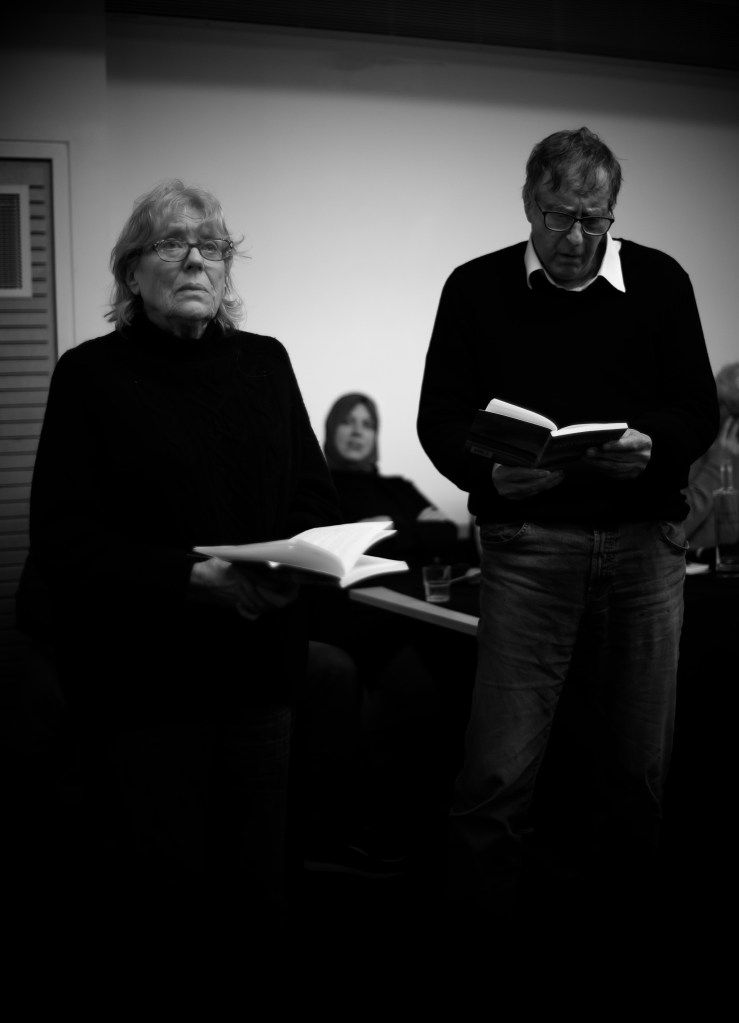
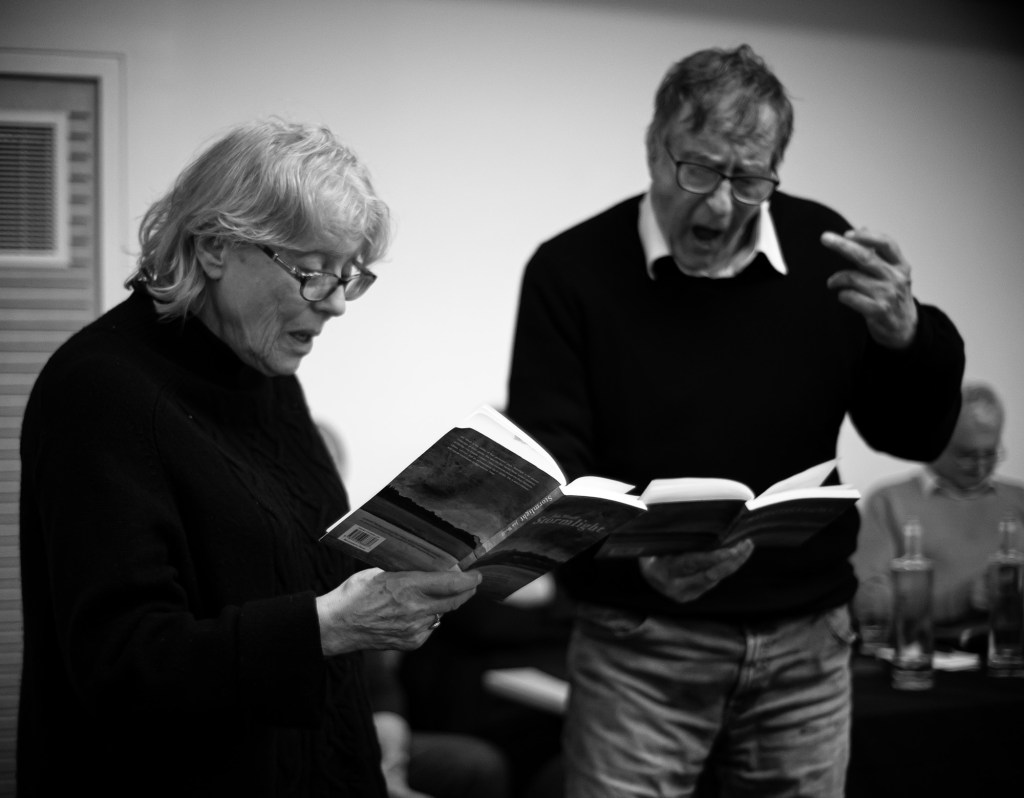
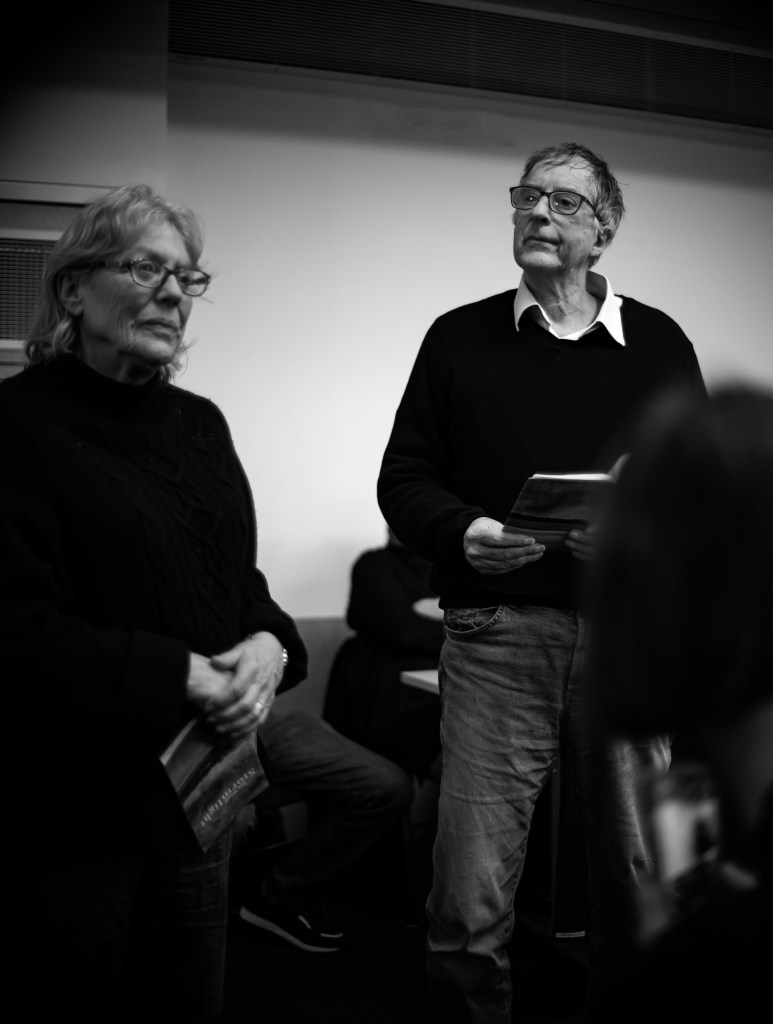
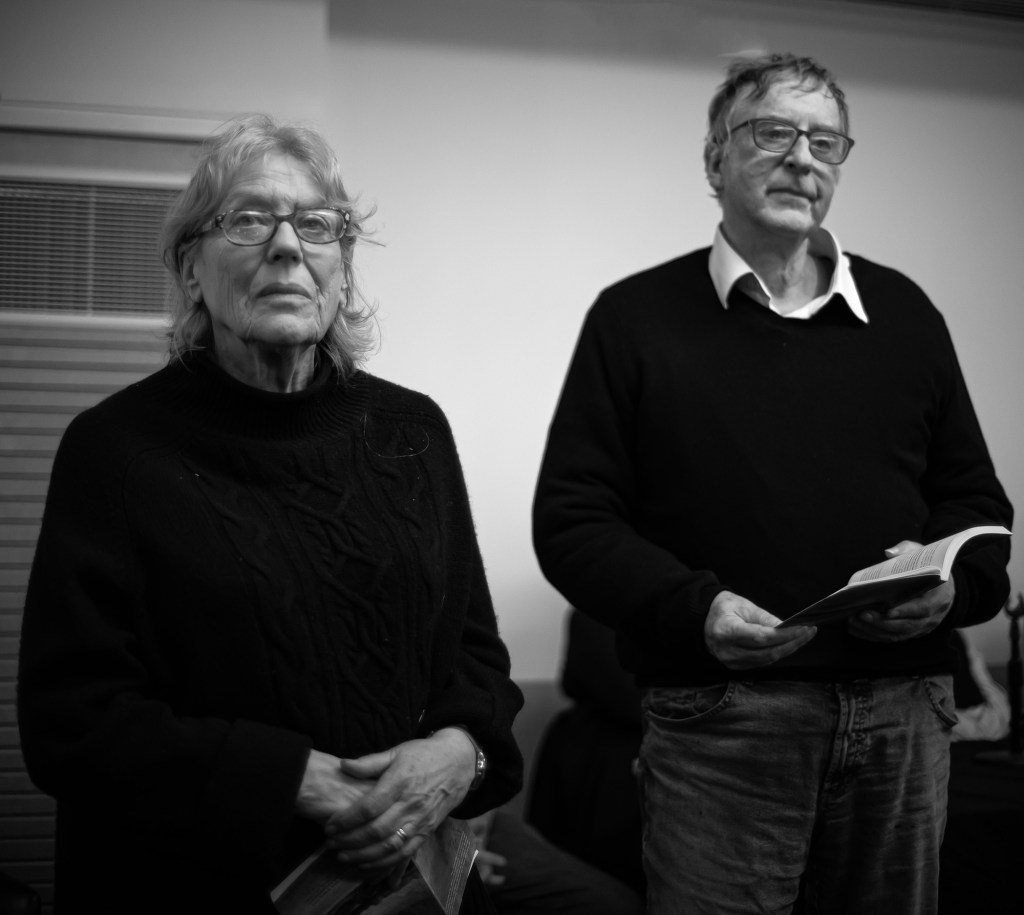
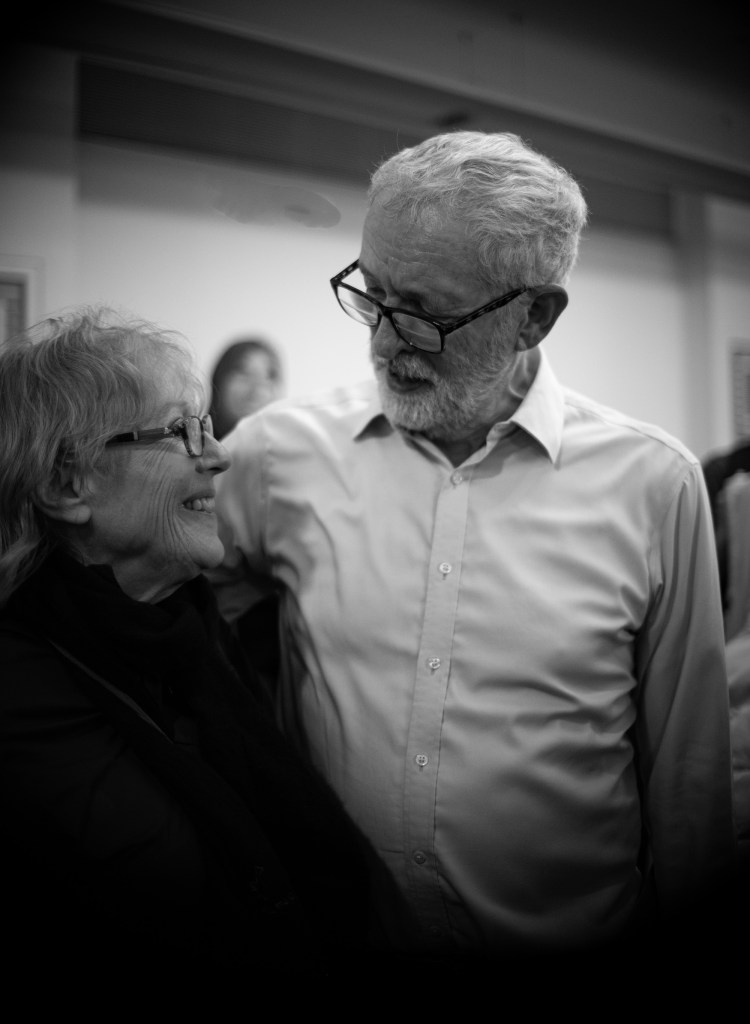
The outcome was good in terms of my stated objectives, I experimented with black and white and colour, and with manual and automatic focus, always using the main settings on my camera in manual mode of course.
LO3: Understand photographic practice and health and safety procedures.
Safe working practices are essential in any photographic project.
Health and safety observations noted in the above project on intimate portraits are as follows:
- In parkour photography, as with any action and sports photography, there are obvious safety concerns both for photographers and participants. Those taking part must not be encouraged to take risks for a ‘better shot’ for example.
- Photographers must ensure to stay out of the way of participants to avoid collisions, crashes, upsetting the course or line of play.
- Parkour is among those sports that take place in the outdoors. So understanding of where private and public property starts and begins, and where photography is and is not permitted is essential. Even when on public land, it is advisable to avoid children and non-consenting adults in shot. It is also advisable to check with sports participants that they are not minors, to comply with safeguarding requirements, even where these are not legal necessities. In addition, the laws around trespass must be observed.
- When carrying equipment such as a bag, a tripod and so on it is important to ensure it is left in a place where it will not be a trip hazard to oneself or sports participants.
- With photography in more general settings, such as that I used in the second half of the project, understanding of the hazards of photographing into the light at sunset should be gained to avoid eye injury.
- Care must be taken with backgrounds, to avoid upsetting people caught unawares in shot, possibly also to avoid car numberplates and so on where the plan is to publish pix on social media or a website. There is much that, while technically not illegal, should still be handled carefully just out of general consideration for others.
- Always with landscape or outdoor photography, especially involving tides and water as well as private property, care must be taken not to trespass, not to invade privacy, not to get cut off on a beach head by an incoming tide. Research into any such hazards should be done before embarking on a shoot.
 Placement
I really like what your wrote and look forward to seeing more.
Arthur is a young man who is passionate about parkour and wanted to create photos that illustrate the skill, fun and beauty of movement. For the first photo, he jumped between two buildings and captured a classic moment of movement. For the second photo, he jumped on a high wall and I loved the way the afternoon sun was caught on the buildings behind in Archway, north London. For the third photo, he was talking to other members of the community and it was a casual moment. In this photo, he is Reflecting on the Opportunities in the Urban Landscape to Train.
I think I got the main points, did I miss any?
Thank you
Juan Miller – Crosserx.com
LikeLike